
 Lakshmi
What happens when a PlayStation adventure you once navigated with a controller is reborn in live action? That’s the story behind Exit 8. Built in just nine months, Kotake Create’s The Exit 8 was crafted as a quick, low-budget project: proof that simplicity can still leave a lasting impression.
Kazunari Ninomiya, an alum of popular J-pop idol group, Arashi, plays The Lost Man in this film adaptation directed by Genki Kawamura. On an ordinary day, as he boards a train with the other passengers. His phone buzzes with news that stops him in his tracks: his girlfriend (Nana Komatsu) is pregnant, and she wants to know what he plans to do. Doubt gnaws at him as he wonders if he is fit to be a father. He witnesses a mother struggling to control her crying child while being scolded by a rude fellow passenger in a business suit. The Lost Man watches the scene unfold, somewhat perturbed, but does nothing to intervene. The weight of his uncertainty triggers a sudden asthma attack, leaving him gasping amidst the rumble of the train.
Ethically speaking, do you think he made the right move? Should he have intervened to support the helpless young mother and faced the wrath of the rude businessman? Or should he have nonchalantly disengaged from the situation entirely, as he did?
From one ethical angle, especially in terms of empathy and social responsibility, stepping in would seem like the stronger choice. The mother is clearly vulnerable, and even a small act, like calmly defusing the situation or offering support, could shift the dynamic. Philosophies that emphasize duty to others or maximizing well-being would lean toward intervention.
On the other hand, there’s a very real human instinct to avoid conflict. The Lost Man doesn’t know how volatile the rude passenger might be, and intervening could escalate things or put him at risk. From a more pragmatic or self-preservation standpoint, disengaging is understandable, even if it feels morally passive.
There’s also a middle ground that often gets overlooked: intervening without confrontation. He could have supported the mother indirectly by offering a kind word, distracting the child, or simply shifting the social atmosphere, without directly challenging the businessman. But that’s not what he did.
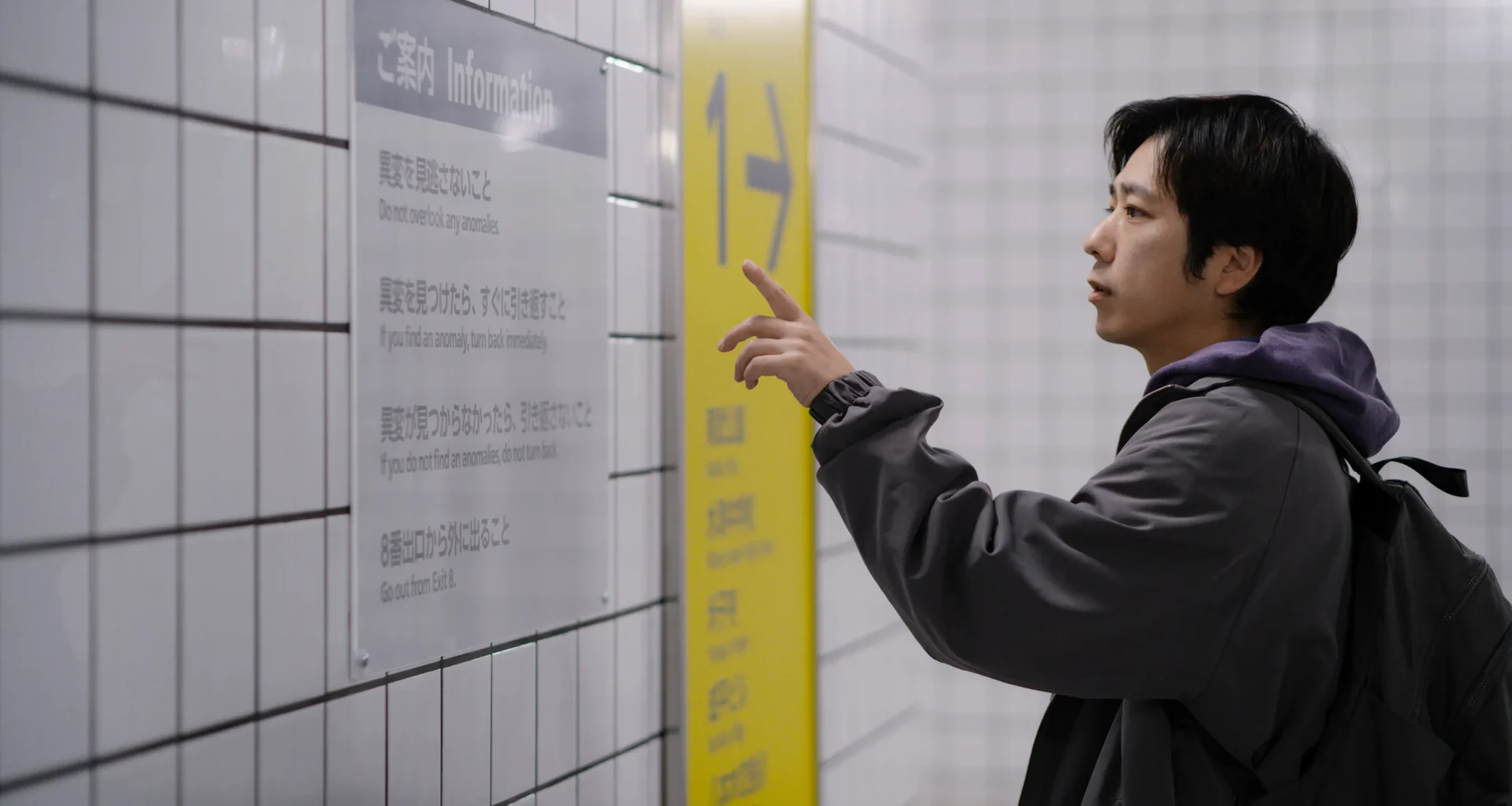
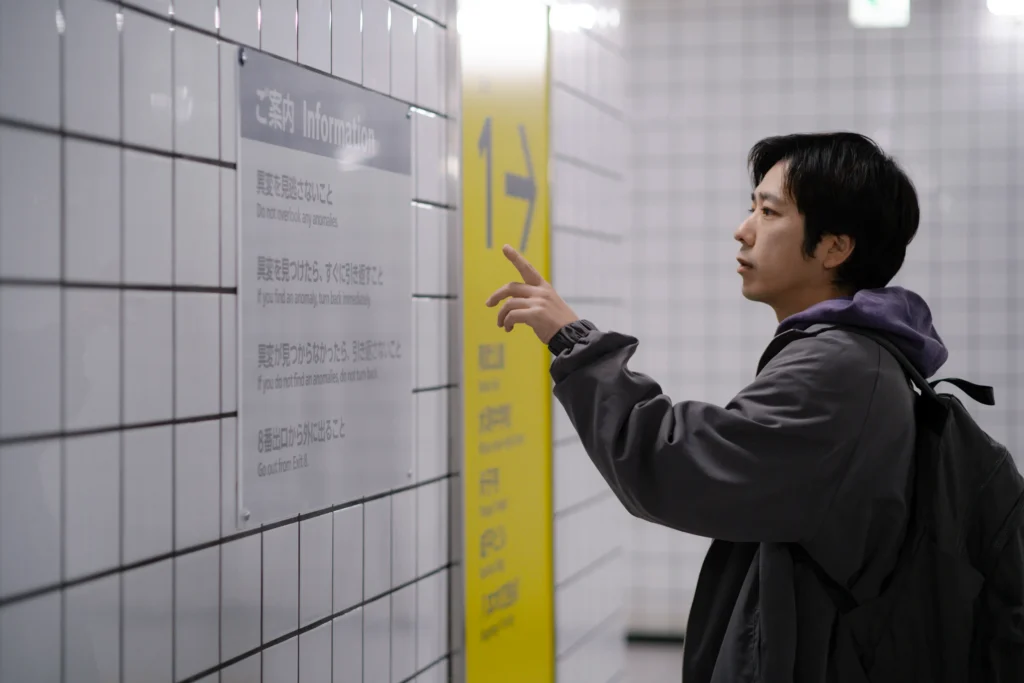
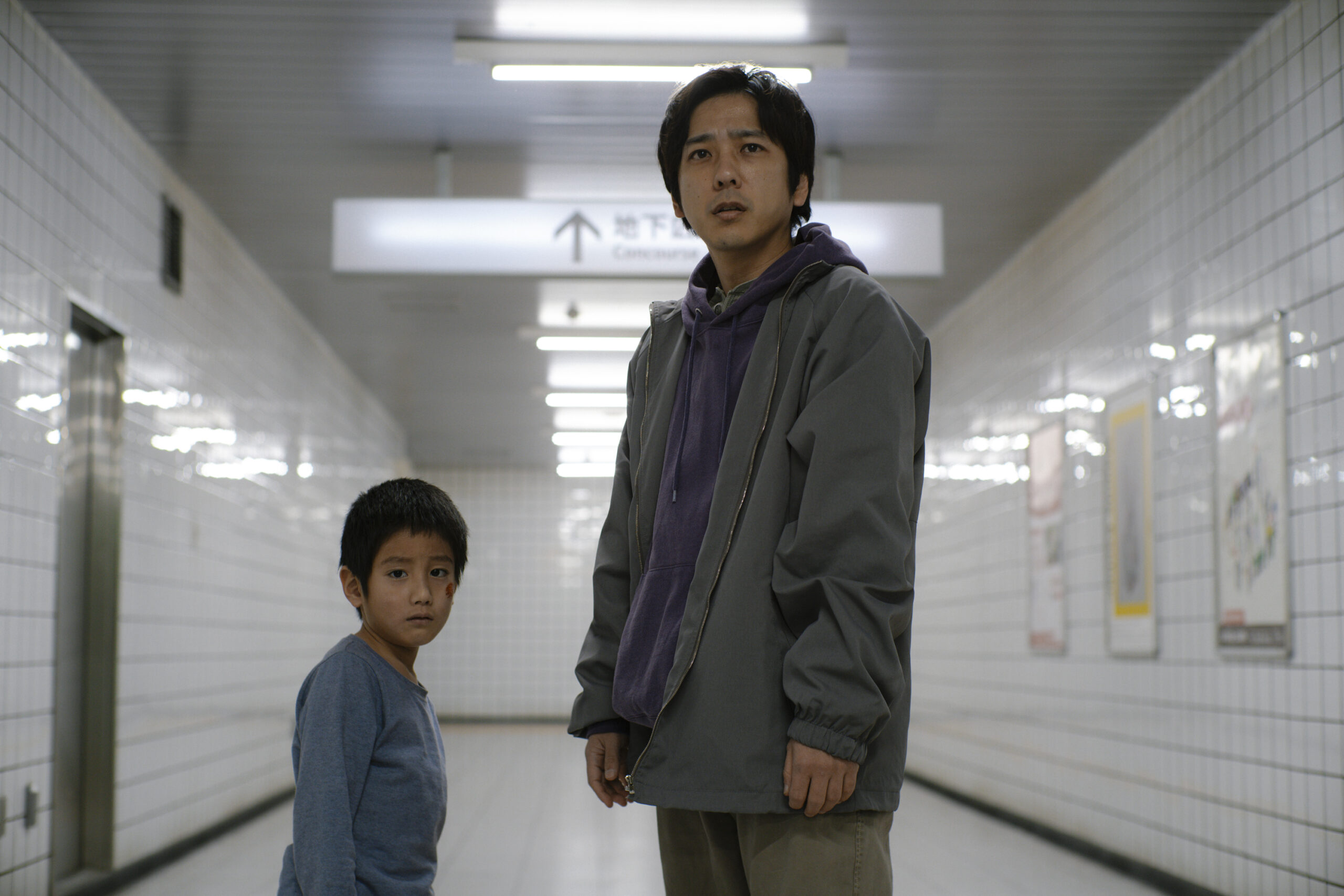
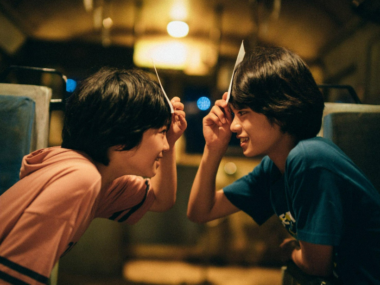
Soon after stepping off the train, he’s pulled into a strange, timeless loop within an endless underground corridor. The rules are deceptively simple: miss nothing. If something feels off, turn back at once. If all seems normal, keep moving forward. Spot every anomaly along the way, and he might finally reach Exit 8. But overlook even one detail, and he’s sent straight back to the beginning. The question lingers: can he ever break free from this infinite passage? Eventually, The Lost Man encounters The Boy (Naru Asanuma), a small child who has been trailing The Walking Man (Yamato Kochi), the silent, enigmatic figure he always sees pacing the corridor in every loop.
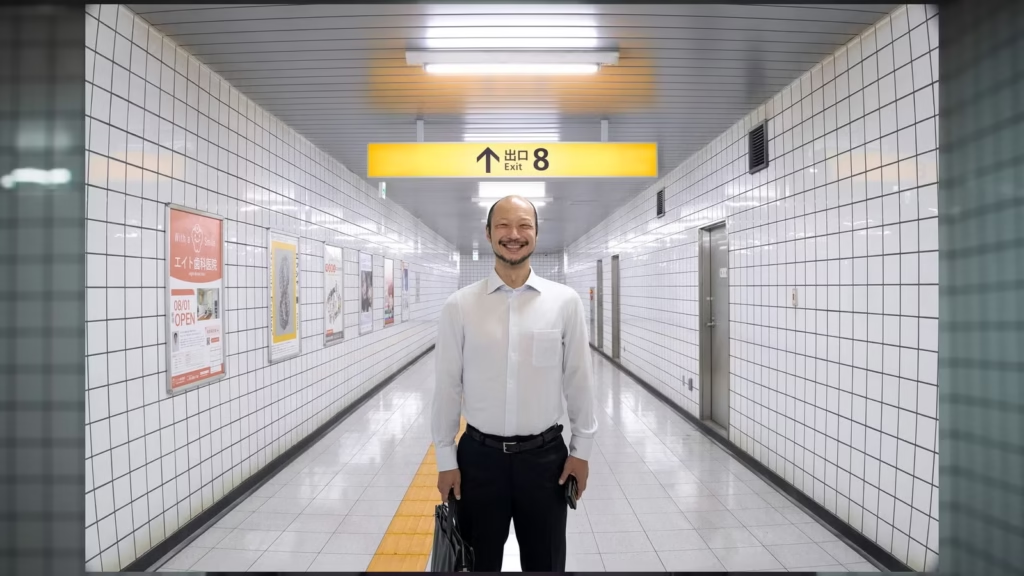
Through the whole film, the director steers us through this infinite maze, weaving in threads of fatherhood, paralysis, solitude, and an undercurrent of hope. As he struggles to break free from this seemingly endless cycle, the protagonist comes face-to-face with the echoes of his childhood, the person he has become, and the depth of his courage and capacity for responsibility. Beyond this personal journey, the film acts as a reflective lens on contemporary Japanese society, questioning how we treat one another and what we value in life.
I would not classify it as a psychological horror but rather as a psycho-thriller. It does not rely on scares but manages to keep your nerves on edge, creating a quiet, lingering tension.
| Release Date: 2025-05-19 (Cannes) 2026-04-10 (World) | Screenplay: Genki Kawamura, Kentaro Hirase |
| Cast: Kazunari Ninomiya, Yamato Kochi, Naru Asanuma, Kotone Hanase, Nana Komatsu | Cinematography: Keisuke Imamura |
| Director: Genki Kawamura | Language: Japanese |
| Runtime: 96 Minutes | Genres: Thriller |


 Lakshmi




-2-300x225.png)