 Lakshmi
When the music of Sirāt swells on screen, it feels like a bridge between worlds: ancient and modern, intimate and cosmic, personal and universal. And that spellbinding soundscape is the work of composer Kanding Ray.
Sirāt (2025), directed by Oliver Laxe, is a visually striking drama that follows Luis and his son as they cross the deserts of southern Morocco searching for their daughter, who vanished after a remote rave. Their journey becomes a metaphysical odyssey through nomadic rave culture, elemental landscapes, and existential reflection. Shot in Spain and Morocco, the film premiered at Cannes, winning the Jury Prize, and later earned Oscar nominations for Best International Feature Film and Best Sound.
Ray’s journey to this moment wasn’t built overnight. It was shaped by a series of transformative experiences and the evolution of his own albums, especially the critically acclaimed Ultrachroma. In the interview that follows, Ray reflects on how a transcendent three-day rave in the Moroccan desert in 2019 became the emotional catalyst for Ultrachroma—a memory he describes as “an omen of what was about to happen.” He explains how that experience and his earlier work informed the haunting, expansive sound of Sirāt, and how his music has always been driven by the search for meaning beyond the ordinary.
In this conversation, One Lash Shot had the opportunity to explore the creative forces behind this brilliant score, and the artistic journey that led Kanding Ray from the desert sands to the edge of cinema’s biggest stage.
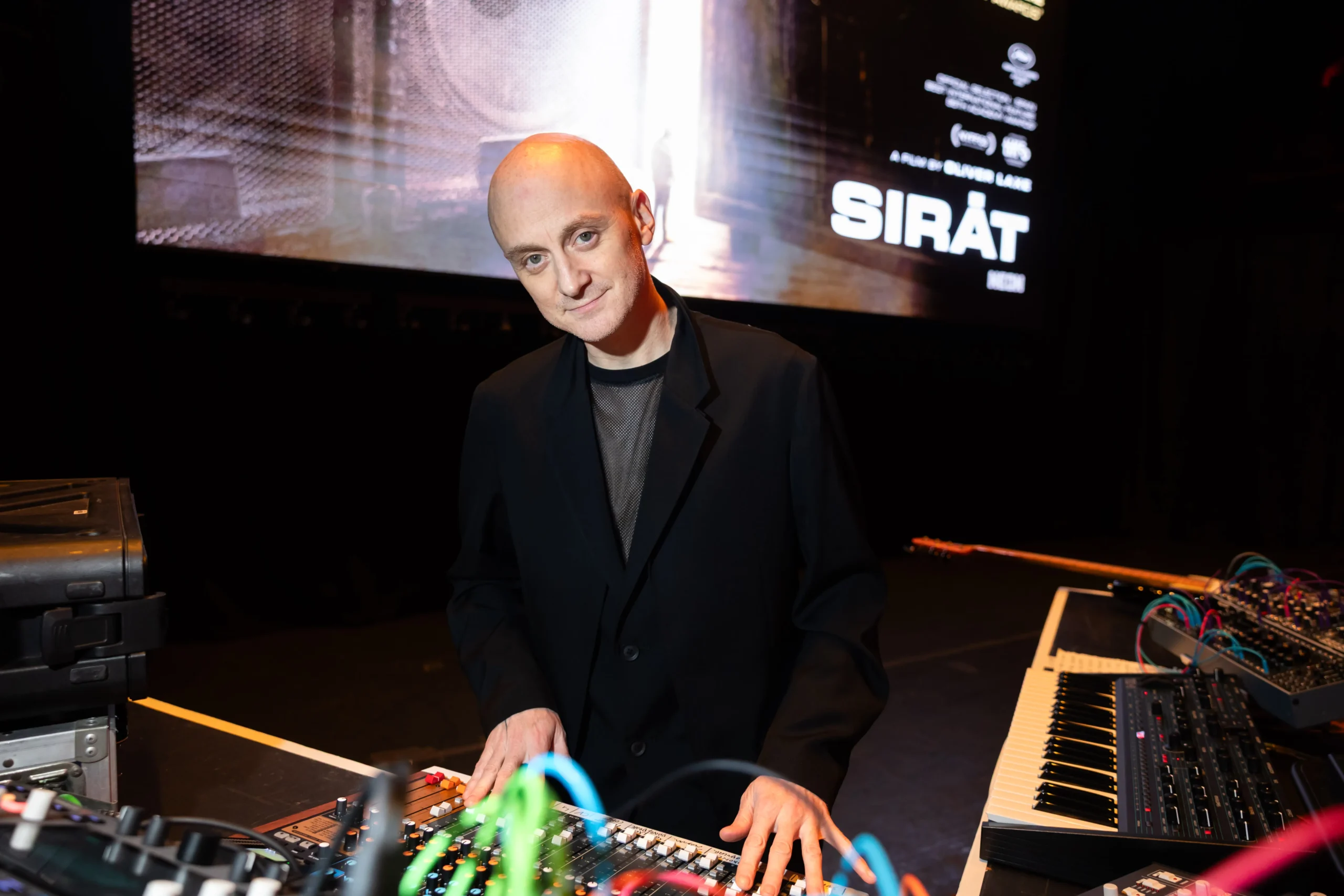
What sparked your love for music, and what led you to pursue it as a musician?
Well, I’ve always loved music. As far back as I can remember, it’s always been a part of my life—first as a listener, and then, later on, I started learning guitar on my own. I’ve always had a very strong emotional connection to it. For me, it’s the most magical way to truly touch the soul without needing an explanation, words, or a text. You don’t even need to understand it—it’s incredibly universal and reaches beyond culture.
I’ve seen that firsthand now as an international artist, playing all over the world: it really transcends borders and cultural differences. It’s an incredible medium for transmitting emotion.
Given that Sirāt is one of your first major scoring credits, how did you and Oliver Laxe first come into contact?
In a very simple way, he just knew my music, loved it, and thought I would be a good fit, so he emailed me. That’s very simple. He sent me an email, and I received a message from Oliver asking if I was interested in working on Sirāt.
The film opens with a rave sequence that stands out as one of the most striking uses of diegetic music I’ve seen from an EDM perspective. How did you go about composing that opening cue?
The opening cue is actually based on a track I made ten years ago. That’s the track that really led Oliver to work with me, because he loved it. We ended up using it in a remixed way—I made some changes. There’s also another track from that same album. The album is called Solens Arc, and the track is called Amber Decay. It has always been one of my most popular tracks.
I had kind of forgotten about it because so much time had passed, and then Oliver brought it back and said, “This is the perfect intro for my film—I want to use it.” So, I changed the texture and made it more intense, a bit faster, and a bit dirtier, so it feels like it’s being played in the rave, in the real space, by these people. It sort of became part of a culture that way.
As for the diegetic part, since they are in a rave, we wanted the spectator to feel what it’s like to be inside with them—to really experience it. So instead of observing from a distance, we bring the spectator in for a more immersive experience.
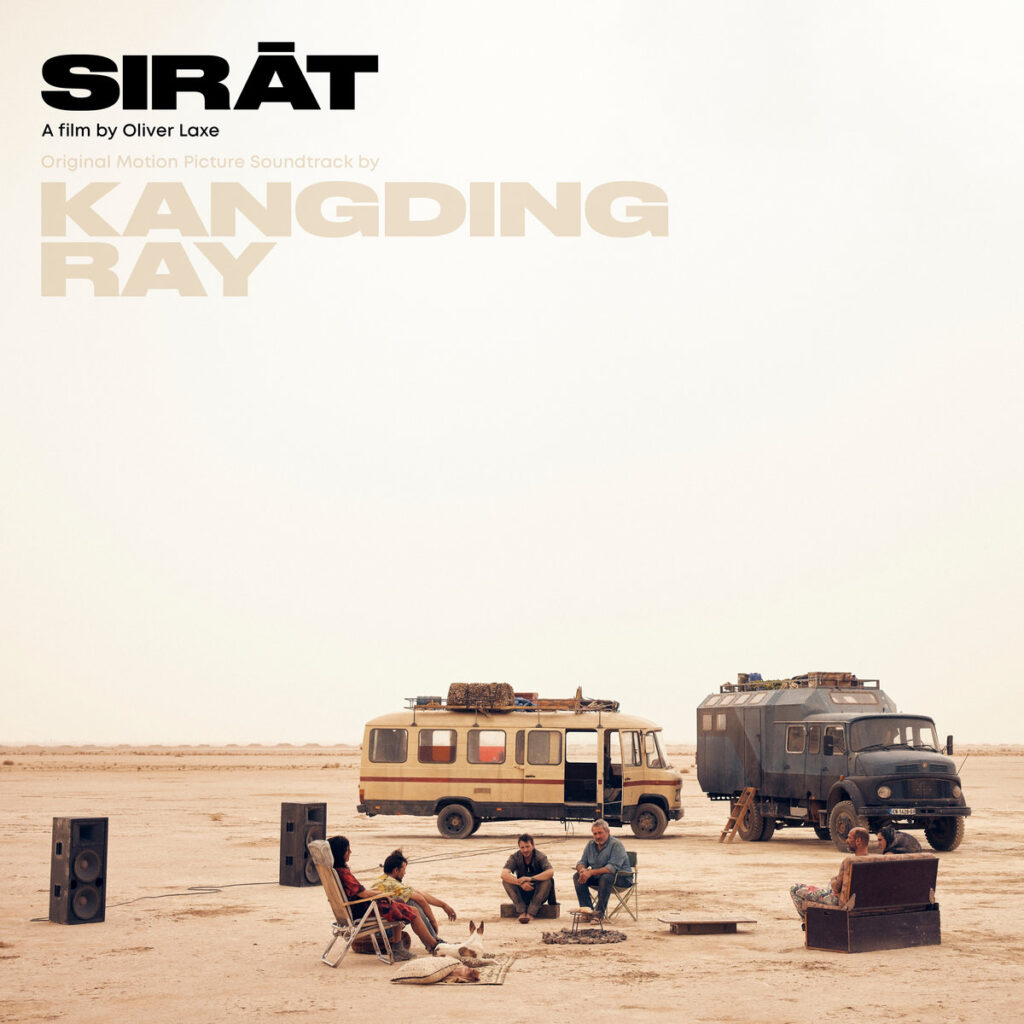
Early in the film, you use high-frequency, psychedelic textures, then the score shifts into something more existential in tone, and later into something more transcendental — almost like a spiritual or ritualistic space. How did you and Oliver categorize or think about these phases during your spotting sessions?
Well, we worked for a very long time even before they started shooting. We spent almost two years working together on the music based on the script. By the time they began shooting, almost all the music was ready. In the meantime, we went scene by scene, trying to find the right texture, the right balance, the right “ingredients,” as you said. Some scenes mark something more spiritual, while others need the euphoria or energy of a road trip.
This approach really helps the music feel integrated with the narrative, the story, the film, and the images—so it doesn’t just become wallpaper. It’s very much part of the film. There isn’t much dialogue in Sirāt, so the music becomes a character in its own right, guiding the spectator and expressing emotions in ways the visuals or dialogue alone cannot.
There are moments in that sequence where the music dominates over the dialogue. Could you talk about why you chose that balance?
Well, it was Oliver’s decision to give me more and more space as we were working. At the beginning, I don’t think we realized it would be this much, but in the end, we ended up with 62 minutes of music in the film, most of it uninterrupted and without dialogue. It really becomes a character in itself, doing its own thing.
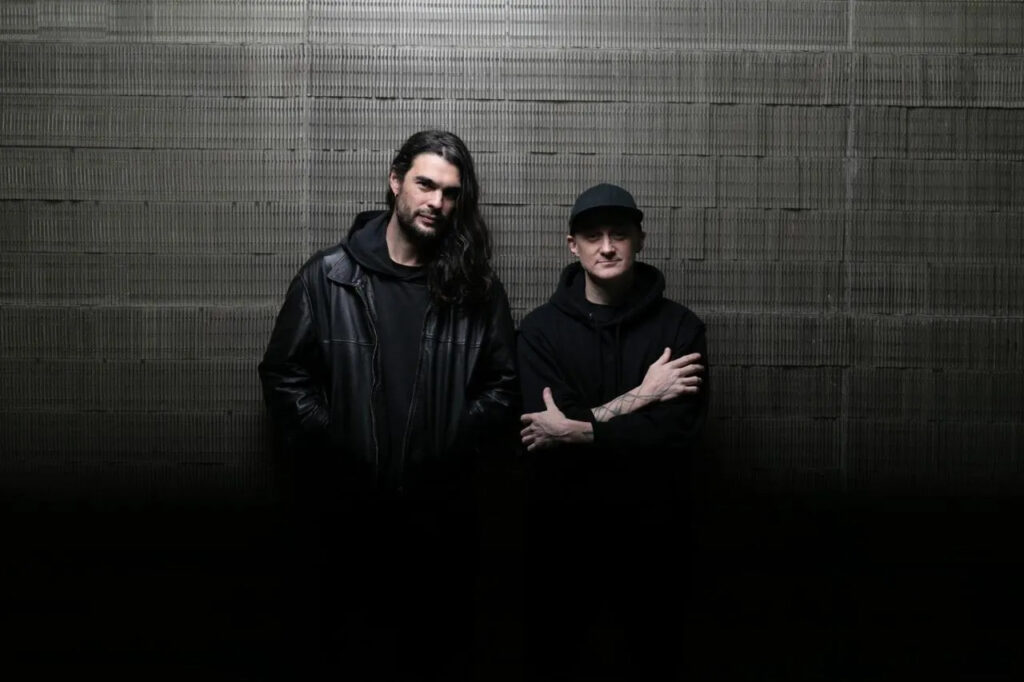
It’s so present, but it really depended on Oliver giving me that space. And once he did, I just took it, you know? It’s quite amazing to have that kind of freedom to express yourself. Sometimes we had cues that were five minutes long and uninterrupted—and you almost never get that in film music.
Your score keeps a strong rhythmic density almost throughout, even in very emotional scenes — how did you find that balance?
Well, there are usually tricks in film music that a composer might use—you know, if you want to induce sadness, tenderness, tension, or other emotions, you use specific tools. But in a lot of ways, in Sirāt, I wanted to take a more oblique, unconventional approach—almost like going in reverse. I wanted to induce emotions in ways that aren’t typical.
That’s why sometimes I went in reverse: using very subtle, ethereal soundscapes or arpeggios in moments of real tension, and, conversely, using very rhythmical cues in parts that are more emotional.
How did working on your own albums, Hyper Opal Mantis and Ultrachroma, shape your approach to scoring Sirāt?
I think a lot about this, because I actually made Ultrachroma after a very transcendental experience in the desert—playing in Morocco. It was like an omen of what was about to happen, though I didn’t know it at the time. I played in 2019 at a rave in the middle of the desert, and it was one of the most amazing experiences of my career. It was a three-day rave, and I carried the memory of that weekend into Ultrachroma.
The album already had a very cinematic, psychedelic texture, almost like a story in itself. A few years later, Oliver approached me to work on this project. In a way, it felt like that experience had been preparation for this work—I had to integrate it into my body first, and then I could compose with that memory and those impressions.
Which was the hardest cue for you to compose?
I’m not going to spoil it, but there’s a very strong, quite shocking scene in the middle of the movie. The cue that follows—when the characters descend the mountain—was the hardest for me. I could never find something big or violent enough to support what had just happened. It was never strong enough, intense enough. I had to work a lot on it to make it feel as vast as the landscape, as vast as the desert.
At that moment, the film shifts from a story of people on a human scale to a story with global implications—a universal story, matching the scale of the landscape. After that, the kid and the father are in a state of depression. Then the cue rises, becomes big, and I had to layer sound after sound so that it felt right. Everything I tried at first felt either too sentimental, too pat, too much pathos—but it wasn’t that.
It was grief, but also violence, anger, and all these emotions at once. It’s almost impossible to describe, which made it a really difficult cue to get right.
[Author’s Note: Kanding, j’ai hâte d’écouter votre prochain album (j’espère plutôt bientôt)!:)]

 Lakshmi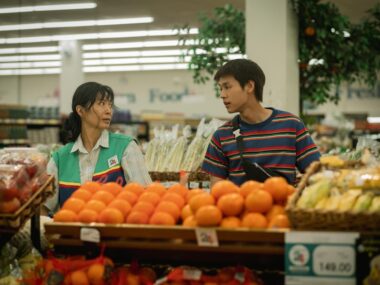




-2-300x225.png)