 Lakshmi
Born in France but shaped by Galicia, Óliver Laxe occupies a cinema of in-between spaces—between land and spirit, silence and revelation. His films move with a quiet, magnetic force, tracing spiritual landscapes and human figures pushed to their limits, where meaning is not explained but felt. Deeply rooted in his Galician heritage, Laxe has forged a singular voice in contemporary cinema: austere, poetic, and unafraid to look for transcendence in the harshest terrains.
He first gained international recognition with You All Are Captains (2010), a bold debut that showcased his unique blend of documentary realism and lyrical storytelling. He followed it with the desert odyssey Mimosas (2016) and the haunting wildfire drama Fire Will Come (2019), each film expanding his reputation as a director who captures both nature’s beauty and its brutality.
In 2025, Laxe returned with Sirāt, a metaphysical journey through Moroccan desert rave culture and familial grief. The film earned him the Jury Prize at the Cannes Film Festival and went on to receive Oscar nominations for Best International Feature Film and Best Sound, confirming Laxe as a major voice in contemporary world cinema—one whose films are as immersive as they are spiritually resonant. Sirāt is the name given to the final crossing—a razor-thin bridge every soul must face on the way to paradise, suspended over the threshold of hell. By borrowing this image for his fourth feature, Laxe gestures toward a passage where the promise of salvation is inseparable from the risk of falling.
In this conversation, One Lash Shot goes behind the film’s spellbinding vision, charting Óliver Laxe’s journey from sun-scorched deserts to the edge of cinema’s biggest spotlight.
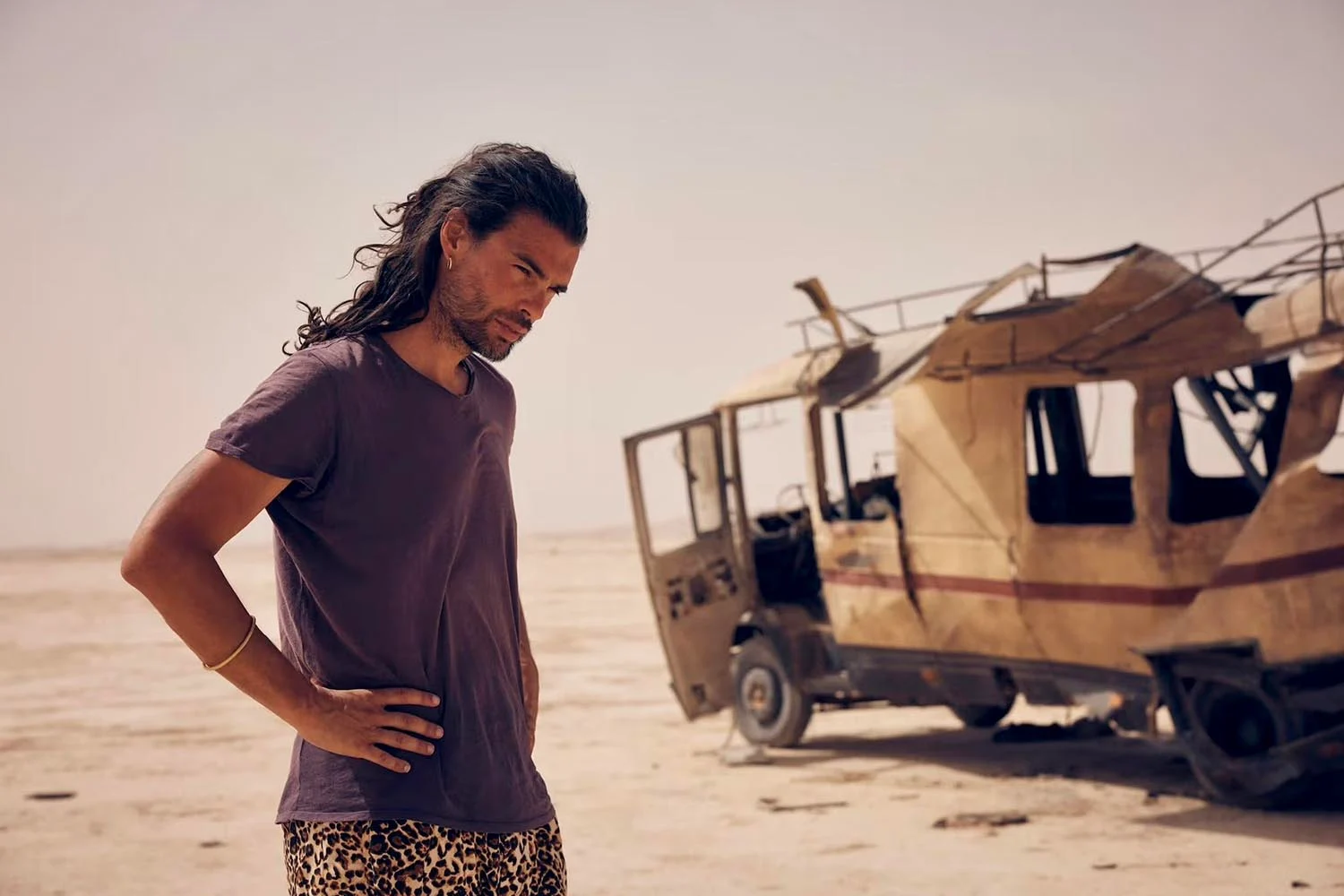
Why did you make this film with this distinct storyline? Was there a specific incident or moment that inspired you to make it?
Yeah, people ask me if this is real, what happened in the film, but it’s the opposite. I made this film because, in my life, I haven’t had any near-death experiences. Death is something that is not present in my life, so I needed to experiment with death. It’s important. I didn’t have the chance to have a dialogue with life through death. That is necessary. So that was my first purpose.
I mean, you know, I like these cultures where people wear a turban on their head. This turban is the fabric they will be buried in—they will be, how do you say, wrapped in it. They will be dressed in the same fabric they have on their head.
Imagine: they are meditating on death, they are experiencing death. It’s really healthy. It’s really important. So, in a way, my intention was to do this—to invite the spectator to wear this turban on their head.
Did you begin conceiving the film around the idea of dance culture, or did it start with the father-son story?
First were the tracks crossing the desert. The desert came first. I was living in the desert in Morocco, preparing another film. And then, secondly, there was the rave culture—the dance. I started making this film by dancing the images I had in my mind from the dance floor, developing these images. And yeah, the other elements were more… things that the script needed.
Sirāt is a bridge that links Hell and Paradise. In the movie, you made it seem that Hell is just a phase where transformations occur. So why?
Yeah, yeah. I mean… a film is always a reflection of the way the filmmaker sees the world, right? I think life is about learning how to die. How to die with dignity. And Sirāt is a name that comes from Islam. It’s a powerful, sacred name. It has musicality, it has light—it’s really powerful.
What does Sirāt mean?
I guess it has different meanings. One of the things I like is that it also means “path.” The path has a physical aspect, but also a metaphysical one. Our path… it has these two dimensions. And the film has these two dimensions too. We’re in a genre film.
It’s an adventure film. There are a lot of obstacles—they have to cross rivers and mountains. You know, they struggle. But all the while, they’re looking inside. They have to look inside. They have to confront their values, their dreams, their fears.
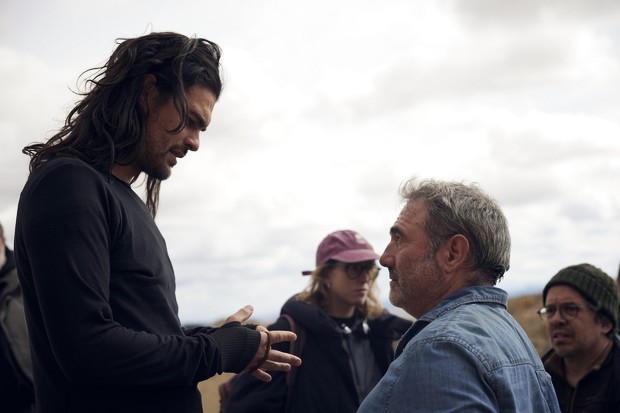
We all have idealizations of ourselves. True or False?
Yeah, I think all of us are neurotic. That means we’re identified with this idealized image of ourselves. But life has a tool to break that idealized image—and that tool is called crisis. It’s the perfect way life has for us to reconnect with ourselves. It breaks everything. Okay—stop with all your things, your fake reality, and look inside.
Except for Sergi and Bruno, the film also employs a cast of non-professional actors. How did you end up selecting all of them?
I used to. I always worked with non-professional actors.
I like people. And in this case, and every film asks you a different thing. You cannot make a film with punks played by actors. There is no more contradiction, you know? An actor— I respect actors, but they are… they are playing a mask. A punk is… I think film needed this truth, this radicality.
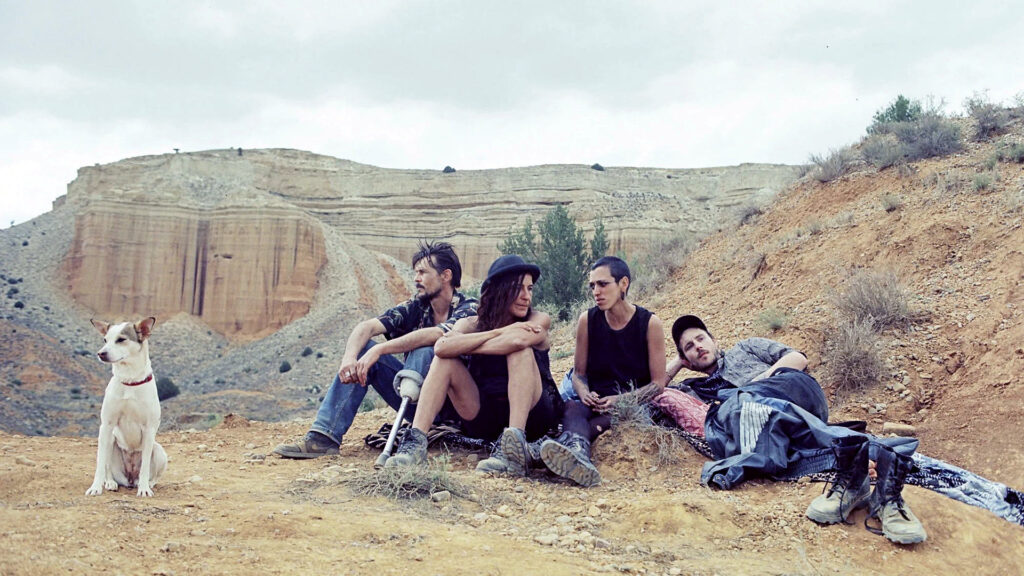
I mean, the film is in their wrinkles. In each wrinkle, there is the essence of this film. In their silence, in their gestures, we get connected with their fragility. That is the fragility of human beings nowadays. My cinema is focused on this detail. So, we did the casting in raves. We went to raves and when we saw people who expressed something mysterious or beautiful, we would tell them—pitching the film to them in the middle of the raves.
Techno music had strong tribal like raging beats with a trance atmosphere. Can you tell me a little about working with [techno producer] Kangding Ray on the music? How did you describe what you wanted to hear, or feel, in the music?
Yeah, I think at the beginning of the film we wanted to express something cathartic—like making a catharsis with the body. We pray with the body. So, we wanted something really intense and rooted, tribal. And at the same time, psychological.
The music we composed for the beginning is psy-techno. So, you have the beat, the kick, but also you have these high frequencies and these psychedelic layers of sound. For the second part of the film, we needed music that was more existential with feelings and music that brings nostalgia. Kind of nostalgia or, as I say, existentialism. And then, for the third part of the film, we needed something more ethereal, transcendental, more abstract. We went into ambient electronic music and approached sacred music.
We think that electronic music is cold. Society sometimes thinks it’s cold. We think that sacred music is more classical, more pleasant. But I don’t agree. I think that this abstraction—the fact that we don’t know where it comes from, the source of electronic music—allows us to express transcendence. It’s in the mystery: Where does it come from? What is this?
“Cry, scream, but don’t stop to dance, even if it’s the end of the world.” Is something you said in press con before. Why do you believe it works?
Yeah, I learned this within the film.
You really believe it?
Yeah. I mean, I think we must celebrate—life and death. Both. I’m optimistic, I think. I mean, it ends for everybody in a way. We are nothing. Our life is dying. It’s getting old, it’s… so… I don’t know. From my perspective, I feel grateful. It’s tough. Life is tough… but there are reasons to celebrate, always.
If there is somebody who is not able to find the reason to celebrate life, then what would you recommend to somebody like that?
I think there is always a reason to be grateful for life. I’m sorry to say— I mean, I’m an optimist. Yeah. I mean, life is like a train: you cannot decide whether you want to go left or right. There are the railways. The only thing you can decide is whether you want to go first class or third class, depending on the level of acceptance you have. I mean, if you want to swim against the current, okay, do it, but it’s stupid. Just get on the train, go first class, and accept what life gives you.
I mean, it’s hard—easy to say, but…
You had stated during an interview that the production team faced intense heat and sandstorms while filming in Morocco. Was that the greatest challenge you faced during the shooting process? Or were there any difficulties for you and Mauro Herce shooting on 16mm in the desert, capturing what you wanted to as far as the dance sequences and the driving scenes?
We are used to projecting ourselves outward and complaining about difficulties. Like, as a filmmaker, we spend a lot of time complaining. For example, we didn’t have enough money. We didn’t have the cast we wanted. That day, the weather wasn’t good. We didn’t want a storm. We wanted something else.
But I think what is really important—the place where things truly matter—is inside. I mean, the most crucial and difficult thing for an artist is to keep and assume their intention, their artistic gesture, until the end, you know. It’s so difficult to make a film.
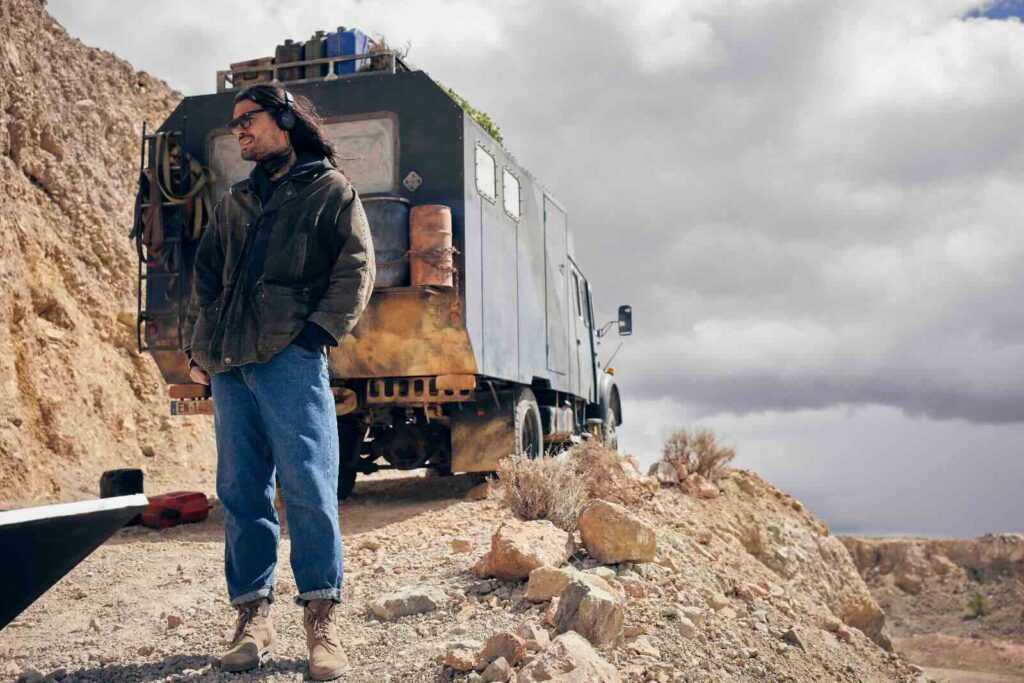
You are surrounded by a lot of people, a lot of pressure—financial pressure, etc. And it’s easy to be scared and to betray yourself, to make conservative decisions. Cinema pushes you to the edge of the abyss, and you get vertigo. But I mean, the most difficult thing is to go all the way to the end with your vision.
The world is going from bad to worse now. Sometimes due to nature, sometimes due to human. Do you think it’s possible to find humanity still like the travelling group of ravers in your movie?
In real life? If we are surrounded by beautiful humanity. Nowadays, a lot of people are facing strong challenges. And they are taking the path of dignity. They are defending their values. The thing is, we think we are disconnected in a way. But when we travel a little bit, wow—there are people who are struggling. Their struggles are huge, but they go in first class. They are there, surfing.
What’s next for you?
I don’t have next: I am here, enjoying showing the film. Next year, I’ll start to write something, but no rush. Present. I am a slow filmmaker:)
[Author’s Note: Óliver, s’il vous plaît reviens vite avec un autre film mettant en scène des acteurs non-professionnels et, surtout, beaucoup de danse et de musique électronique !!:)]

 Lakshmi