 Lakshmi
Long before Manila’s Finest began collecting awards, it was already an ambitious undertaking—a period crime drama that revisits the final years before Martial Law through the eyes of a police officer caught in the moral fault lines of a changing nation. Directed by acclaimed filmmaker Raymond Red, whose Anino made history as the first Filipino film to win the Palme d’Or for Short Film at Cannes, the film has since become one of the most celebrated titles of the 2025 Metro Manila Film Festival. It emerged as the festival’s most awarded entry, taking home eight trophies, including Best Cinematography, Best Production Design, Best Sound, Best Musical Score, Best Original Theme Song, the prestigious Gatpuno Antonio J. Villegas Cultural Award, and Third Best Picture, before continuing its momentum with international screenings at the 2026 New York Asian Film Festival.
Piolo Pascual has built one of Philippine cinema’s most accomplished filmographies, from his award-winning performance in Dekada ’70 to the Cannes-screened crime thriller On the Job. Alongside box-office successes like Milan and Starting Over Again and his transformative triple-role performance in Mallari, Pascual has consistently balanced mainstream appeal with artistically ambitious work. With Manila’s Finest, he once again takes on a role defined by history, moral complexity, and quiet emotional power.
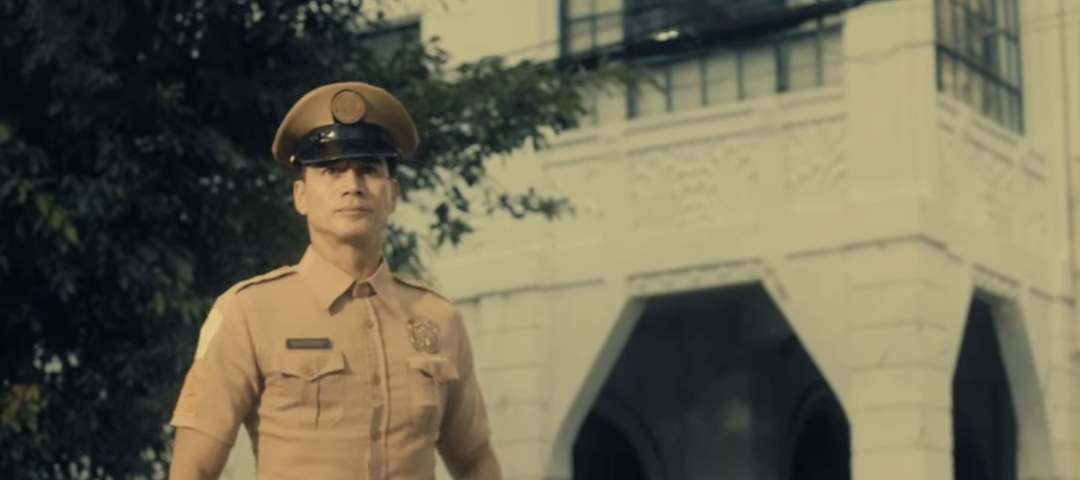
At the heart of the film is Piolo Pascual, delivering one of the most restrained and nuanced performances of his career as Lt. Homer Magtibay—a policeman navigating corruption, loyalty, and conscience on the eve of one of the country’s darkest chapters.
Together, Red and Pascual have crafted a film that is as visually evocative as it is politically resonant, proving that historical cinema can be both intimate and urgent. In this conversation, the director and actor reflect on bringing Manila’s Finest to life, the painstaking work behind its authenticity, and why its themes continue to echo far beyond the period it portrays.
One Lash Shot sat down with Piolo Pascual and Director Raymond Red to discuss the making of Manila’s Finest, their first creative collaboration, the challenges of bringing a defining chapter of Philippine history to the screen, and how the film explores duty, morality, and the human cost of justice.
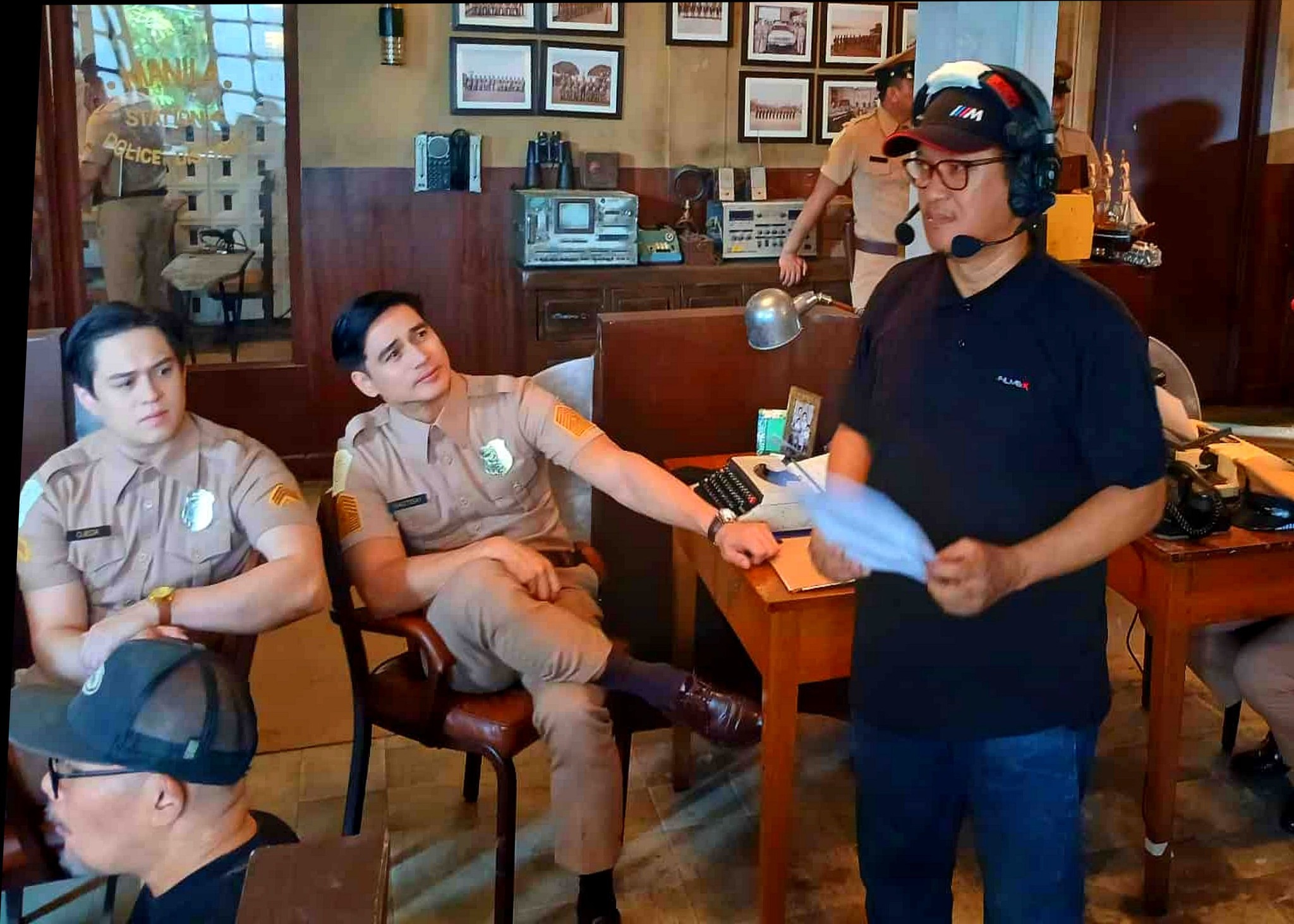
Raymond, Manila’s Finest explores a turbulent period in Manila’s history. What drew you to tell this story within the social and political landscape of the late 1960s? While it differs thematically from the modern urban alienation of Anino, it feels connected to your earlier historical films like Sakay and Bayani. How do you see this film fitting into your broader exploration of Philippine history?
Direk Raymond: Well, to explain it simply, the film was offered to me, and it was already set up. The cast was already in place—everything was ready. When I read the script, I realized it was exactly the kind of material I wanted to make. It aligns with the kind of work I do. I like period films. I like looking back at the past. I like nostalgia. I love production design.
I’m also a cinematographer, so I like telling stories primarily through visuals. This script definitely offered that. And I’m really interested in socio-political subject matter, as you can see from my previous films. So accepting the project felt like a natural decision.
I’ve never made a film specifically set during this period in Philippine history. It’s the late ’60s, and what’s significant is that it explores the people, the police force, and how they were affected by the events leading up to what eventually became the imposition of Martial Law in the early ’70s. It’s a fascinating and tumultuous era.
Piolo, your character Captain Homer Magtibay is not portrayed as a traditional hero, but as someone caught between his sense of duty, personal struggles, and the changing political landscape of 1969 Manila. What interested you most about exploring such a morally complex character?
Piolo: Being part of a period film, I really love the nostalgia. It’s like being on the set with Direk Raymond and seeing all these period pieces come to life. I also loved the opportunity to portray someone who is a real human being—not a caricature of how he might be perceived.
He’s very human in the way he relates to people and to his family. And as a cop, we wanted to present them in a different light because there have been changes over time in how policemen are viewed and portrayed today. During that period, they were seen as people who had the respect of society.
I really enjoyed that aspect because growing up, when you saw a policeman, they were someone you turned to for help—not just for support, but also for protection and security. Wearing the uniform brought me back to that time and that era.
I was really interested in doing something like this because it felt like coming full circle from when I did Dekada’70, 25 years ago, which also touched on Martial Law and was set in the ’60s. I wanted to explore something different this time, while still having that socio-political aspect.
Through cinema, we wanted to raise awareness and remind people that what happened before is still relevant today. We have to do something about it. As an actor, I think it’s part of your responsibility to enlighten your audience—not necessarily to influence them, but to make them think and reflect on what they can do moving forward.
So, I was really happy to be cast in this role.
Piolo, you weren’t only acting in the film—you were also credited as one of the producers and performed the title track. How did you balance these different responsibilities, and what inspired your involvement with the music side of the project?
Piolo: I know, right? Well, I’m the kind of guy who does everything, and when they asked me to be part of the project, they also wanted me to come on board as a producer. I took it on because I’ve also produced my own films, so there’s a sense of ownership that comes with it. There’s creative involvement and responsibility.
Then, when they gave me the song to record, which was composed by Vehnee Saturno, one of the Philippines’ most prominent songwriters, I said yes right away. When I take on something, I go all in. Whatever they ask me to do, I do my best to deliver.
It was also a great opportunity to work on a Vehnee Saturno composition and, especially, to be part of an original song for the film.
Direk Raymond: It also won the Best Original Theme Song award at the Metro Manila Film Festival.
The team conducted interviews with retired Manila police officers from the 1960s to capture the authentic language, mannerisms, and culture of the force during that period. Raymond, how did this research influence your direction? And Piolo, how did it help you approach your role as an actor?
Direk Raymond: Well, yeah, I always tell this story. When I sat down with the creative team as the director, I realized I was the only person who was alive in 1969. Everybody else was much younger than me—or wasn’t even born yet. A lot of the PAs, production managers, and other members of the team weren’t around during that time. I was alive then, but I was very, very young.
But I do have very vivid memories of that period, and it helped. I remember my uncles, my dad, the nuances of the language, and the way people spoke. I was able to use those memories to guide the actors on how to approach the dialogue and capture the spirit of the time.
Of course, there were also the small details of the period—the props, the designs, and the overall atmosphere. I was able to guide our production designer with those elements. I always joke about this, but there was a motel scene where I became the consultant. I told them, “Okay, in the motel, you have to have these details on the table. There should be food—the dishes and things that people would have actually eaten during that time.”
Piolo: And some rubber…
Direk Raymond: So, yeah, it really helps to have that background.
Of course, we also did our research, really looking into the nuances of the period. The script, which was written by Michiko Yamamoto, Moira Lang, and Sherad Anthony Sanchez, had already gone through extensive research. They were all co-writers, and that foundation helped us a lot.
But when the entire creative team came together during pre-production, we still had to do additional research. It was important for everyone, especially the actors, to fully understand the period. We consulted respected writers and historians who were familiar with that era.
We even interviewed a retired Manila’s Finest police officer who served during that time, which gave us very valuable and accurate insights into the world we were portraying.
Piolo: Yeah, just to add to what Director Raymond said.
It really did help a lot that we had an interview with a retired Manila’s Finest cop. I was observing his mannerisms, the way he talked, and his nuances. We also had historians—we had Jose Maria “Pete” Lacaba and Ricky Lee. So, it was a treat because they shared stories about what it was like back then.
But also, from my end as an actor, I would watch videos from the ’60s—how Manila was, what the Philippines was like, and how the people were during that time. I also interviewed my mom, who was very much alive during that era, and asked her about what society was like back then.
And yeah, what I usually do when preparing for a character is I watch videos on YouTube just to identify the kind of character I want to portray, making sure that everything is down to the last detail.
You know, you don’t just ad-lib because it’s really important for you to act and look like you’re from the ’60s. You can’t just improvise. We had that parameter for the film. So, with Direk Raymond’s guidance, we also had an acting coach. It was really a treat for us because, you know, just by wearing the uniform, it would really transport you back in time.
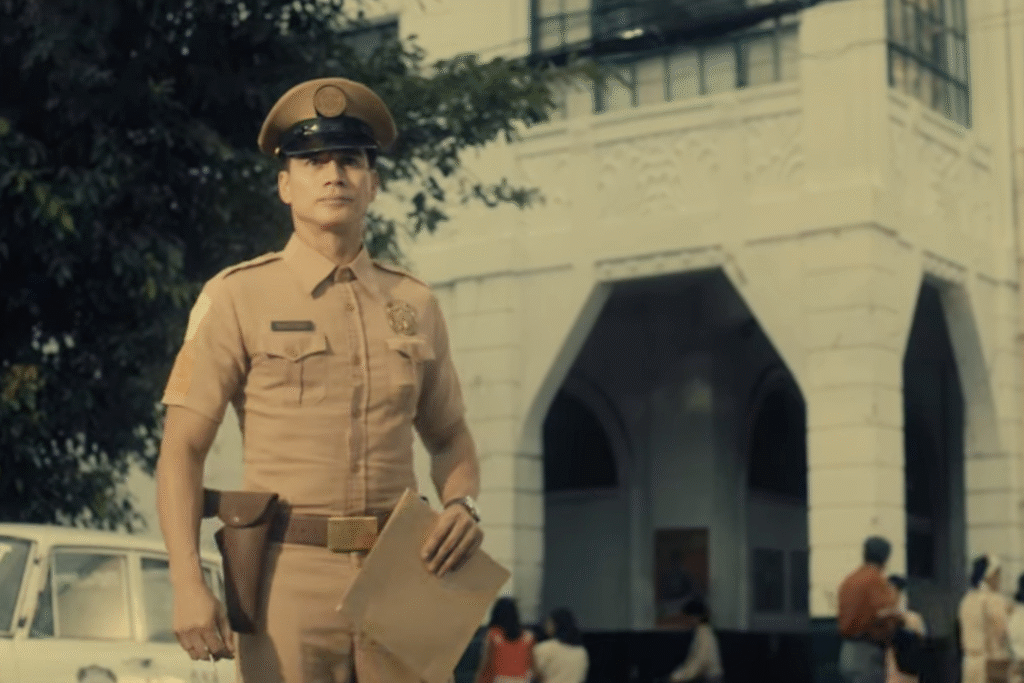
Piolo, Manila’s Finest brought you back to many iconic locations that are closely connected to some of your previous projects, including Manila, On the Job, and Quiapo. What was it like returning to these familiar places and seeing them transformed into 1969 Manila through Raymond’s vision? Did those locations bring back any memories or influence the way you approached your character?
Piolo: A lot of memories, a lot of films that I’ve done. Even the first film that I did, Lagarista, was shot in Manila.
I was still a newbie back then, so people didn’t even notice that we were filming, and the reels were actually attached to the bike. So, it was really a treat. We were still shooting on film during that time.
And then, when I did On the Job, we had a lot of running scenes around Manila. The indie film Manila that I did was also shot around the city. So, it brings back a lot of good memories.
But more than that, it really gives you that sense and feeling of what it’s like to be in Manila, what it’s like to be a Filipino in Manila, surrounded by a constantly changing environment. And for me, being Filipino, I love being able to showcase Manila because that’s where I grew up. Most of the films that I’ve done were shot in Manila. It’s picturesque. It’s cinematic. So, anytime I’m asked to do a film in Manila, to shoot in Manila, I’d go for it. I’d do it.
Describe the film in one word.
Piolo: For me, it’s timely because of what’s happening—not just in the Philippines, but around the world. It’s very chaotic. There’s so much unrest and so much conflict happening, not just here in the Philippines, but globally.
Direk Raymond: Well, the simplest word, I guess, is “nostalgic.”
But if you allow me another word, I think “relevant” is very important. So, it’s both relevant and nostalgic because it deals with history.

 Lakshmi