
 Lakshmi
Thai filmmaker Paween Purijitpanya takes action cinema into bold new territory with GOD SKIN, a high-octane cyberpunk spectacle that collides the brutal physicality of Muay Thai with cutting-edge technology, ancient spiritual traditions, and a dark vision of the future. Known for his distinctive visual style and inventive genre storytelling, Paween made his mark with Thai horror films such as Body (2007), 4BIA (2008), and Phobia 2 (2009), before exploring the intersection of science and the supernatural in Ghost Lab (2021) and the futuristic anthology series Tomorrow and I (2024).
GOD SKIN follows Marwin or Win for short (played by Gee Sutthirak Subvijitra), a struggling Bangkok delivery rider drawn into Mirage, an underground fighting arena where wealthy spectators use VR technology and nanobot boosters to enhance their favourite fighters. As Win rises through the ranks, he discovers that beneath the spectacular fights and promise of fame lies a sinister web of secrets.
Featuring explosive combat choreography by members of the legendary Panna Stunt Team, known for their work on the ONG-BAK films, GOD SKIN fuses traditional Muay Thai with futuristic video-game aesthetics, eye-popping visual effects, and the mystical power of yantra tattoos.
In this One Lash Shot interview, Paween Purijitpanya takes us behind the scenes of GOD SKIN, discussing the challenges of working with the Panna Stunt Team to create its explosive action sequences, the futuristic possibilities of nanotechnology and its role in the film’s high-stakes combat, and the enduring cultural significance of Muay Thai and traditional yantra tattoos. We also explore how ancient beliefs and modern science intersect in the film’s imaginative mythology, how its dazzling arcade-like spectacle gradually gives way to a darker dystopian thriller, and how Paween balances action, comedy, and social commentary to create a uniquely Thai vision of cyberpunk cinema.
Watch God Skin at the Toronto Reel Asian International Film Festival on November 19 at 7:00 PM at the Innis Town Hall.
Tickets are available here. The 30th Toronto Reel Asian International Film Festival runs from November 11 to 21, 2026, with selected feature films and all shorts available online across Canada from November 16 to 29, 2026.
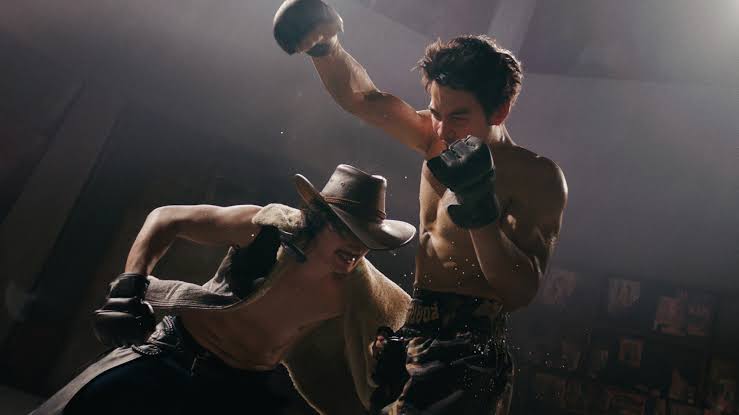
How did you blend Thai traditions, including Khon dance, spiritual beliefs, and visual symbolism, with God Skin’s futuristic cyberpunk world and video-game elements like health points and live-action UI?
For GOD SKIN, I wanted to bring together different kinds of pop culture from both Thailand and around the world to create a world that feels unfamiliar but still has elements the audience can connect with. Many of these influences come from my own interests and the things I grew up with, including video games, Hollywood movies, and Thai cultural beliefs. I wanted to bring all these elements together.
I think we took the visual language of fighting games, including the health bars you mentioned, the on-screen interfaces, and other elements, and blended them with Muay Thai and the animal symbolism found in traditional Thai tattoos, which we call yantra tattoos. But I didn’t want these elements to be there just because they looked cool. Each one had to serve the story, too. The game-like interface, for example, makes the fights exciting and immediately understandable, but it also reflects something darker. These are real human beings putting their lives on the line, while the people watching them see them as video game characters. That contrast helps us create a world that is both entertaining and unsettling—a futuristic world that still feels connected to the society we live in today.
Having explored biotechnology in Tomorrow and I, how did you adapt the concept of Yantra tattoos and nanotechnology for God Skin while balancing futuristic science with their sacred Thai spiritual significance?
Yeah, you know, nanotechnology is real, and that was one of the inspirations for GOD SKIN. The scientific ideas behind both GOD SKIN and the series Tomorrow and I came from Dr. Pat, whom we call P’Pat, a professor at MIT in Boston. He was also one of the creators of Tomorrow and I.
He showed me a video about medical research exploring how technology can stimulate the nervous system or muscles to help people with paralysis regain movement. I was really impressed by what I saw, and it got me thinking: if technology could help the human body move, what might happen if it advanced far enough to control the body, too? That idea fascinated me, but it also frightened me.
At the same time, I wanted to bring in traditional Thai tattoos, particularly sacred tattoos known as yantra tattoos. Some people believe these tattoos offer protection, strength, and even invincibility. For example, an elephant tattoo might symbolize strength, while a tiger tattoo might be believed to protect someone from bullets or other harm.
So, I wanted to connect these traditional Thai beliefs with modern technology and incorporate the animals associated with these tattoos into the film. By bringing these ideas together, we created a world where ancient spiritual beliefs and futuristic science coexist.
How did working with MIT Media Lab researcher Pat Pataranutaporn shape the film’s ideas about bio-digital augmentation, and how did you balance the scientific concepts with the fast pace of a martial arts thriller?
Actually, one of my earlier works, about five years ago, was a horror film called Ghost Lab. It’s about two doctors who explore the supernatural through a scientific perspective, particularly the idea of proving the existence of ghosts. P’Pat was interested in this kind of subject, too, because he had already done research and written a paper about ghosts.
So, he contacted me through Facebook Messenger and introduced himself by sending me a 24-page Keynote presentation explaining who he was and what he wanted to work on with me. He was interested in collaborating on the Ghost Lab project.
That was how it all started, yeah.
Working with the Panna Stunt Team, known for Ong-Bak: Muay Thai Warrior, how did you stage the gritty locker-room long-take sequence, and what physical challenges did the action scenes pose for the actors? Gee Subvijitra mentioned during press rounds how brutal the training was—how did you maintain that physical realism while layering in digital VFX?
The first step was making sure that the stunt team and I understood the same creative direction. In this film, some sequences are more fantastical and inspired by video games, while others needed to feel raw, brutal, and grounded. The team understood what I was looking for and translated those ideas into choreography.
The locker room fight was a particularly challenging sequence. It wasn’t originally designed to be filmed in one continuous take, but as we worked on it, the team and I kept pushing ourselves to see how far we could take the sequence within the limitations we had. It became a real challenge for everyone.
We also couldn’t have achieved it without the dedication of our lead actor, Gee Sutthirak Subvijitra. He had never acted in an action movie before, having previously worked mainly in romantic comedies and dramas. Gee spent six months building his physique and another six months rehearsing the action sequences. The amount of work he put in was extraordinary. He had to learn the choreography while maintaining the physical and emotional intensity of each scene, which was a huge challenge.
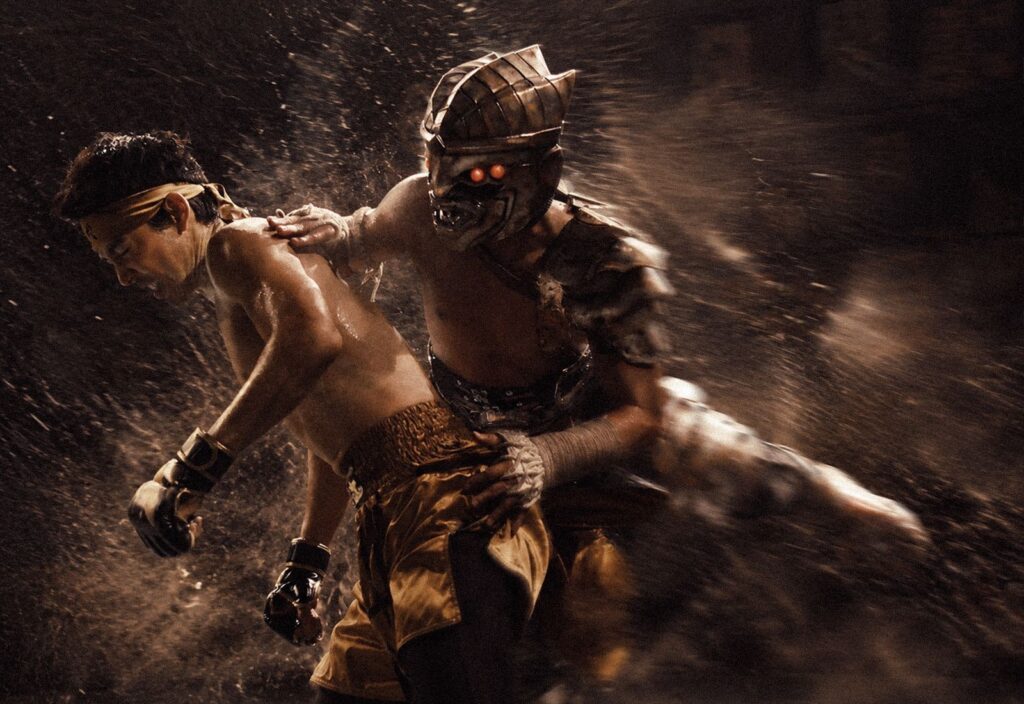
When it came to the visual effects, we planned from the beginning how the animal powers would fit into the choreography. But the foundation was always the performers and the stunt work. The movements, impacts, and physical exertion had to feel real. The digital effects were there to enhance what the actors were doing and bring the fantasy to life.
How does God Skin use cybernetic action to explore AI replacing workers, Thailand’s healthcare debt crisis, and the inequalities faced by ordinary people?
I’m surprised by how this story resonates with what we’re experiencing around the world today. For me, the action in GOD SKIN is connected to a bigger question about the world we live in: as technology becomes more powerful, who actually benefits from it, and who ultimately pays the price?
Win is an ordinary man trying to survive in an increasingly uncertain society, where the cost of living keeps rising and caring for someone you love can become an overwhelming financial burden. He doesn’t enter the arena because his dream is to become a fighter. He does it because he needs money to help his mother, right?
The technology in the film promises to make people stronger, but the people who control it are those who already have power and money. The fighters risk their bodies while wealthy spectators place bets and profit from their pain. In that sense, the arena is an exaggerated version of something we can already recognize in our own society. Ordinary people are constantly told to work harder and fight their way out of their problems, even when the system around them leaves them with very few choices.
The film isn’t saying that technology itself is evil. It’s asking what happens when powerful technology exists within a deeply unequal society. If we don’t address that inequality, the future may become more technologically advanced without becoming any more humane.
Having moved from horror films like 4BIA and Body to high-concept sci-fi action, do you see more hard science fiction in the future of Thai cinema, and are there other genres or projects you’re excited to explore next?
Actually, our film flopped in Thailand, you know? It was challenging to introduce this kind of film to Thai audiences, especially when horror has such a strong and established audience. I love horror. I was born with horror, and it has always been an important part of my career. But my team and I also wanted to challenge ourselves and offer Thai audiences something different.
With GOD SKIN, we had the opportunity to combine science fiction, action, and social commentary in a way that we don’t often see in Thai cinema. I hope films like this can help open the door to greater variety, including more science fiction grounded in real ideas.
As for what comes next, I’m still excited to explore different genres and new ways of telling stories. For me, genre is a way to draw people in, but what matters most is what the story leaves them thinking about afterward. I’ve always believed that cinema can do more than entertain. It can help us see the world from a different perspective, ask questions, and perhaps come away with a little more understanding of ourselves and the society we live in.
If you had to describe the film in one word, what would it be?
Mind-blowing. Or jaw-dropping.

 Lakshmi