 Lakshmi
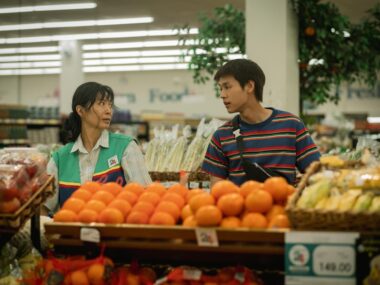
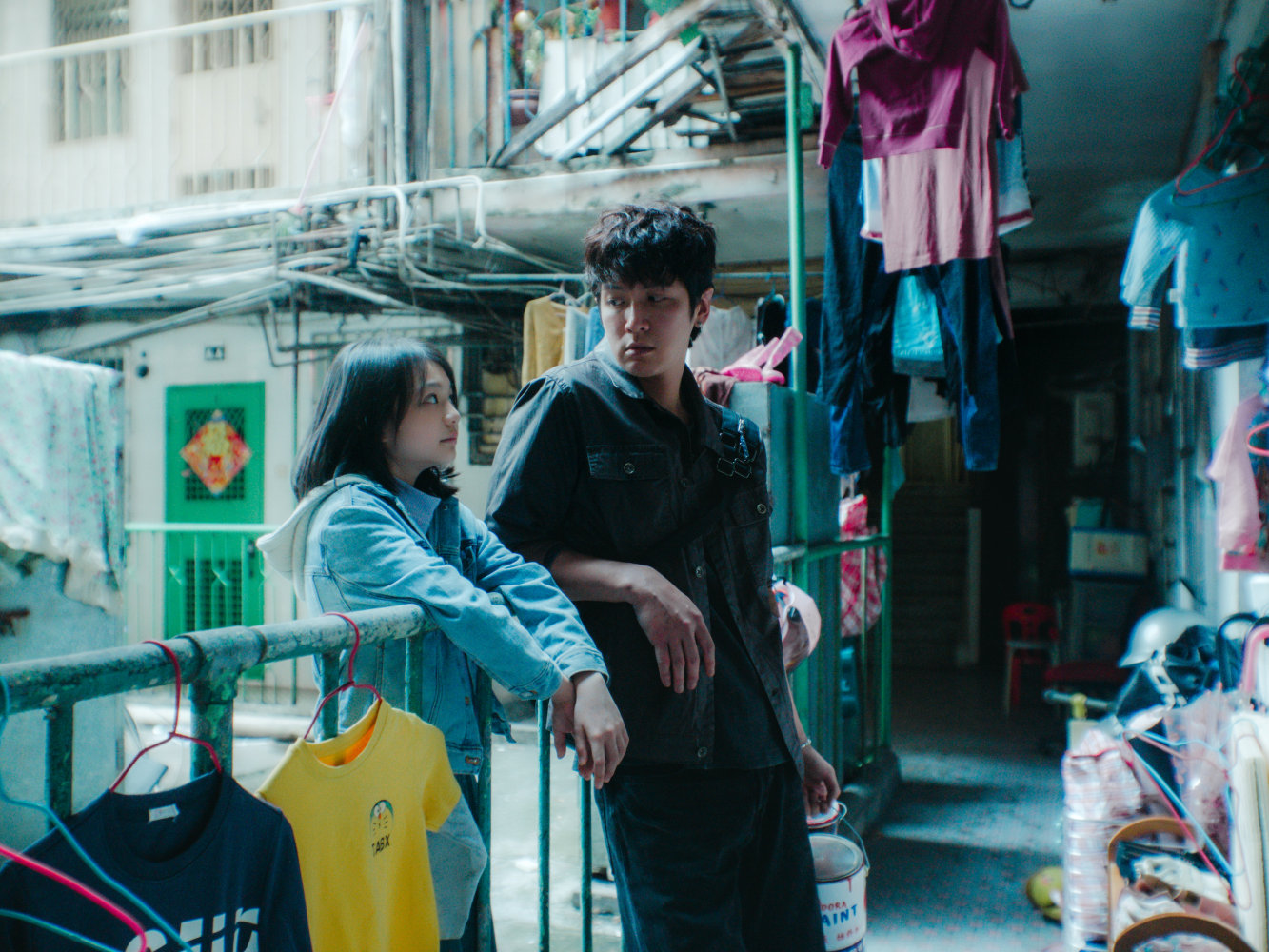
Taiwanese cinema continues to deliver emotionally resonant stories that blend intimate human drama with universal themes, and I Blew Out the Candles Before Making a Wish is no exception. Set against the dazzling yet unforgiving backdrop of Macau, the film follows Hua, a debt collector from Taiwan, and Jojo, a young girl who discovers a cache of casino chips and dreams of using them to reunite her fractured family. As the unlikely pair navigate Macau’s casinos in pursuit of a better future, their journey evolves into a heartfelt exploration of family, responsibility, hope, and the unexpected bonds that emerge in life’s darkest moments.
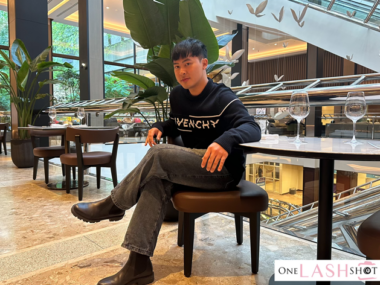
Leading the film as Hua is Kai Ko, one of Taiwan’s most celebrated actors, whose breakout performance in You Are the Apple of My Eye established him as a major star. Since then, he has built an impressive body of work with acclaimed films including Till We Meet Again, the Netflix series At the Moment and Let’s Talk About Chu, and the recent martial arts drama Kung Fu.
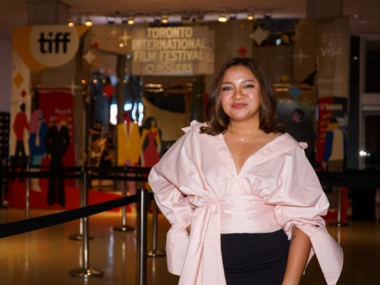
Making his feature directorial debut, Chao (Chai) Koi-wang brings a fresh and compassionate perspective to the screen, earning his film a spotlight at the New York Asian Film Festival (NYAFF). Previously recognized for his work as a writer and filmmaker, he co-directed the film with Hu Chin-yen, crafting a moving portrait of ordinary people searching for hope amid financial hardship and personal loss. His sensitive storytelling and authentic depiction of Macau have already drawn attention on the international festival circuit.
One Lash Shot sat down with Kai Ko and director Chai Koi-wang to discuss the making of this poignant drama, their creative collaboration, the emotional themes that anchor the film, and why I Blew Out the Candles Before Making a Wish is ultimately a story about finding light—even when fate seems determined to extinguish it.
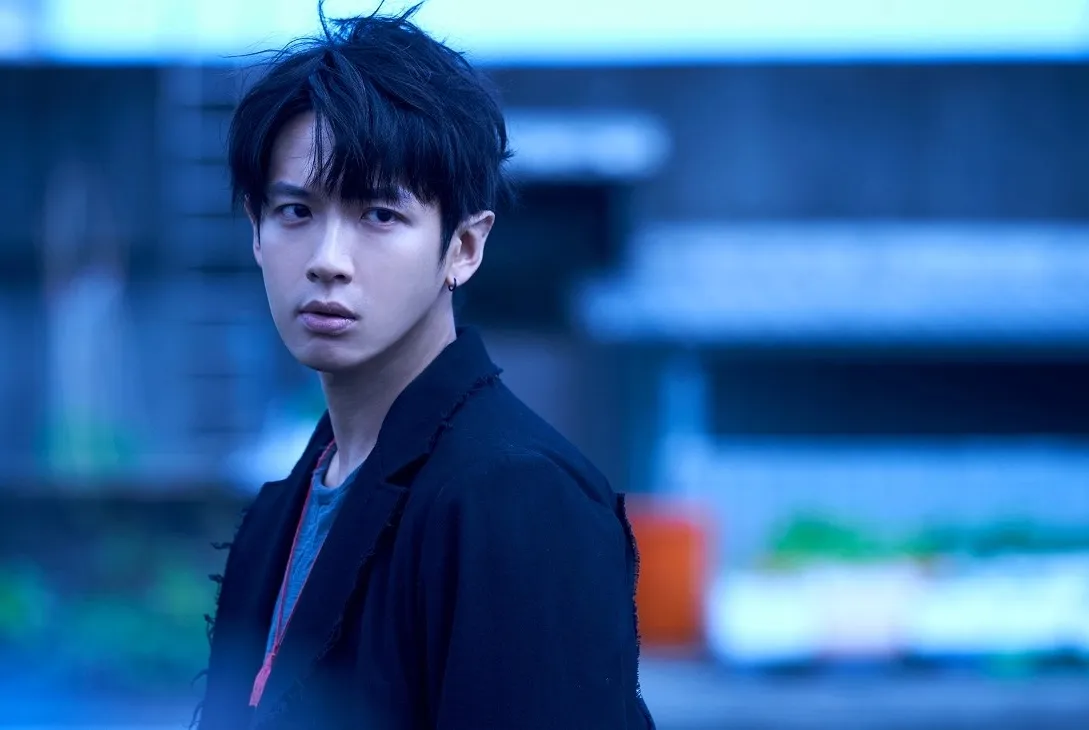
How did you get started in film in the first place?
Koi-Wang: So, I was born and raised in Macau. When I reached university age, I realized there wasn’t really a well-developed film industry in Macau. So, I started looking for a way to pursue filmmaking as a career. At the time, Taiwan had a lot of opportunities in film and television, along with many subsidies and financial support programs that I could apply for. That’s why I came to Taiwan to study filmmaking, and eventually I embarked on this journey in the film industry.
Kai: For me, it was actually an accident. I signed with a company and went to an audition. At first, I treated it as practice. I auditioned a few more times, and eventually I was selected. That led to the project that we had been working toward.
I was kind of pushed into continuing as an actor. I signed with an agent and kept going to auditions, and I thought it was a good way to get a feel for the industry. Then, for whatever reason, I was fortunate enough to be cast in You Are the Apple of My Eye. After that, I was sort of pushed into the film industry because the movie became incredibly popular. Since then, I’ve had many opportunities to be part of different film projects.
This is your directorial debut and you co- directed this film with Taiwanese director Hu Chin-ye, so how did your collaboration shape the film’s vision, since you are from Macau itself? Were there different perspectives between you that ultimately helped strengthen the story?
Koi-Wang: So, Hu is primarily a screenwriter, and we’ve collaborated on many projects together, including short films and TV series. Usually, I handle the directing—the visual execution, the shots, and bringing the story to life—while we work together on developing the characters and shaping the narrative.
For this particular project, I actually wrote the screenplay with a different writer. But during pre-production and production, I consulted with Hu quite a bit because he has a very objective way of analyzing scenes and characters.
I felt that we have such a strong creative partnership that I wanted to continue it on this project as well, so I invited him to join me as a co-director.
Kai, what attracted you to the role of Hua, a debt collector who unexpectedly becomes a protector and emotional support figure for Jojo when you first read the script?
Kai: So, at first, I was very drawn to Macau because, to me, it is such a fantastic place that I had always wanted to work in. As an actor based in Taiwan, I didn’t really have many opportunities to make a film in Macau. So, when I read the script and found out that this story was set in Macau, I became very interested.
I talked with the director about the different characters—not only the character I play, a debt collector, but also JoJo’s character. Although she is much younger in terms of age, she has such an old soul and is incredibly mature. On the other hand, there is a sharp contrast with my character. Age-wise, he is much older, but at the same time, he is also quite childish.
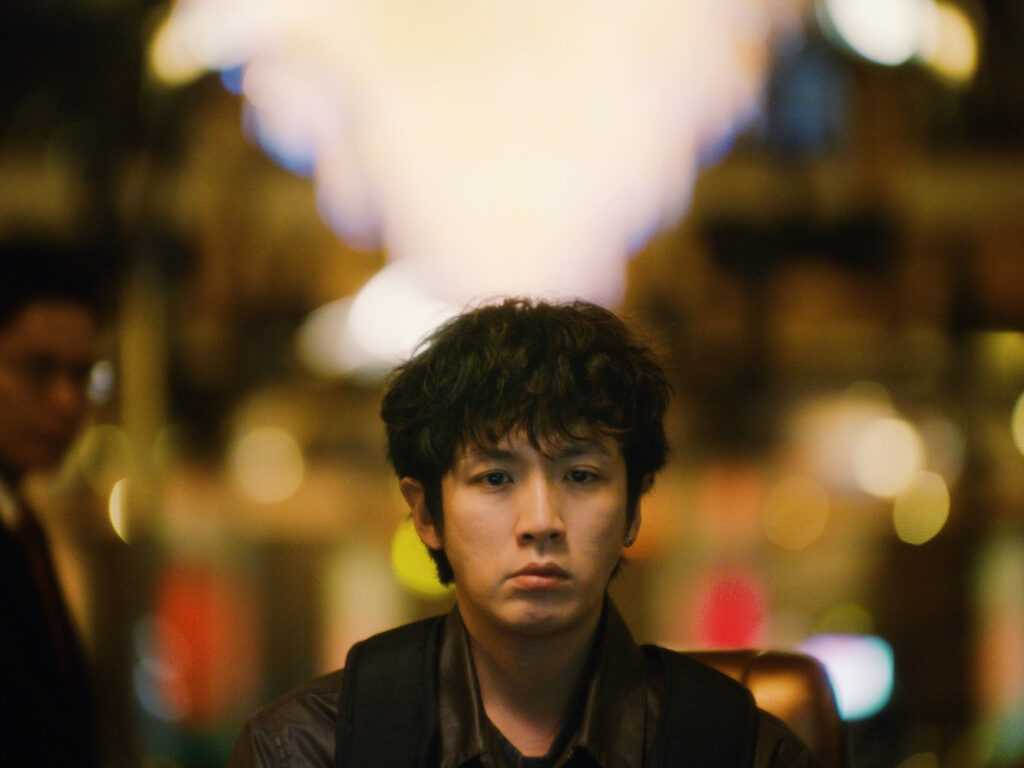
I really liked the contrast between these two characters. As for the debt collector, I think he is a very complex character. I like that, no matter what choices he makes in life, he is always trying to do the right thing. He is kind-hearted and always trying to make the best of every situation he finds himself in.
For all of those reasons, I decided to participate and become part of this project.
Kai, I Blew Out the Candles Before Making a Wish marked your first time filming an entire feature in Macau. What was it like discovering the city?
Kai: So, I definitely discovered quite a different side of Macau that I didn’t know about. In the past, I only had the opportunity to visit the newer areas of the city—the more developed parts of Macau—because those are the glitzy, casino-focused areas that people usually associate with the place.
This time, because of the film, I had the opportunity to explore the older parts of Macau, which are much more residential. You can really see the mix of cultures, the architectural design styles, and the different ways of living within those communities and environments.
Through this experience, I gained a deeper understanding and appreciation of how these diverse cultures have shaped this particular place called Macau, and how people live within such a unique and multicultural environment.
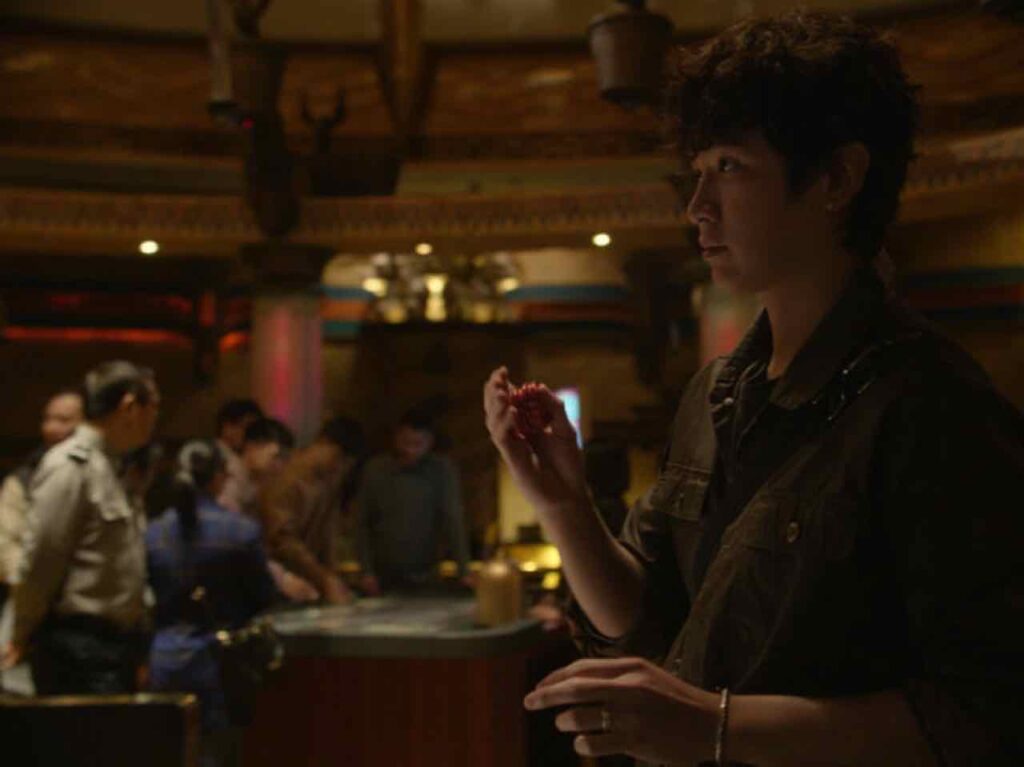
Macau is often associated with luxury and casinos and gambling. How did you approach presenting a more vulnerable and human side of the city through this story?
Koi-Wang: I think I created this particular film as a project with a lot of my lived experiences infused into it.
The reason is because I was born and raised in Macau. I’m a local. Even though I went to Taiwan for university, I still spent quite a bit of time in Macau, especially during my summer vacations.
So I don’t really know how foreigners see Macau from their perspective, but for me, as a local, these are the places, spaces, and people that I interact with on a daily basis.
Therefore, I wanted to bring them into my stories and into my film because this is the kind of local perspective that I wanted to present. Many of the characters I developed for this film are inspired by people I’ve encountered or experiences I’ve had while growing up in Macau or returning there later in life, and I transformed those elements into the story.
For example, one of the underworld mob bosses is based on someone I actually had the chance to encounter through a friend of a friend in real life. I felt that this was such a fascinating and vivid character that I wanted to incorporate into the film.
That’s the way I approached this project—by taking real-life characters and experiences that I encountered in my daily life and bringing them into the film.
Kai, you learned Cantonese from scratch for this role. Given the complexity of the language’s tone system, what was the most difficult aspect of preparing and performing in Cantonese on set?
Kai: Yes, it was indeed quite difficult. But because my character is Taiwanese and comes to Macau, some of his lines are intentionally mocked by Jojo, and some of his Cantonese expressions are not supposed to be completely authentic.
However, I still had to learn Cantonese for the role, so I spent a lot of time studying it. I think Cantonese is the most difficult language I have ever experienced. I’ve worked with many different languages through filming, but this was definitely the most challenging because there are so many tones, and it’s very easy to make a mistake by using the wrong one.
So honestly, I never wanted to speak Cantonese again after this experience. For me, taking on this language was one of the biggest challenges of the role.
In fact, even after we wrapped the film, I haven’t really practiced Cantonese at all because it was something I found extremely, extremely challenging.
Which scene was the most challenging to film, and what made it so difficult?
Koi-Wang: I think we sort of have a mutual agreement about which scene was the most challenging.
I think it has to be the scene where they play with the water. That particular scene was very difficult because it was one of the earliest scenes I wanted to incorporate into the film after being inspired by some short clips I saw online. I really wanted it to be part of the story.
But I found it technically challenging—not only in terms of making sure the water would behave the way I wanted, but also figuring out how both characters could jump in without it feeling awkward or unnatural.
Luckily, Kai did such a great job. He made the scene feel very seamless and worked so well with the water, the tube, and the hose. So, while it was a challenging scene to execute, the final result turned out really well.
Kai: That’s true.
Explain the ending of the film in your terms. What do you think happens after the last scene?
Koi-Wang: For me, as a director, I don’t think they would gamble after that. In the final church scene, they still have that one last debt chip. I don’t think they would use it unless it was absolutely necessary—as a last resort.
I imagine that Kai’s character would eventually become someone who works in interior design, perhaps designing apartments. And for the little girl, I think she would continue to be the best student she can be and hope for the best—that her father will eventually return.
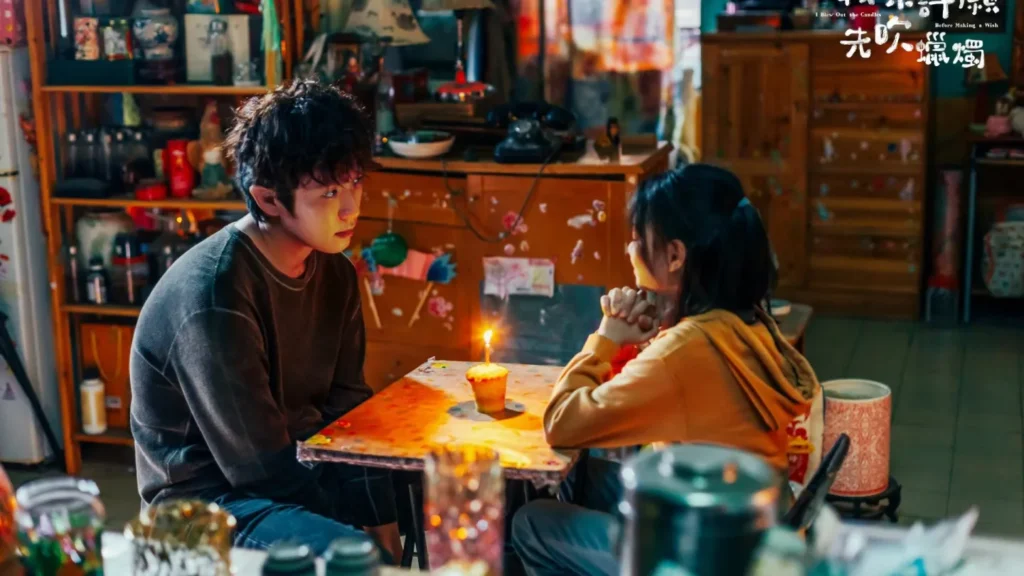
Kai: I agree with the director that they will pursue the right path. I think they will each move toward their own future.
But from the viewer’s perspective, I also want them to understand that both characters will maintain the qualities and characteristics that defined them from the beginning. You have this very mature little girl who can be quite naughty, but at the same time, she is definitely an old soul. And that creates such a great contrast with my character, who is very childish even though he is older. I think those unique qualities and characteristics of these two characters will remain unchanged.
If you had to describe the film in one word, what would it be?
Koi-Wang: Miracle. So many extraordinary things happen, and from the girl’s perspective, everything feels like a miracle.
Kai: Kindness.

 Lakshmi