 Lakshmi
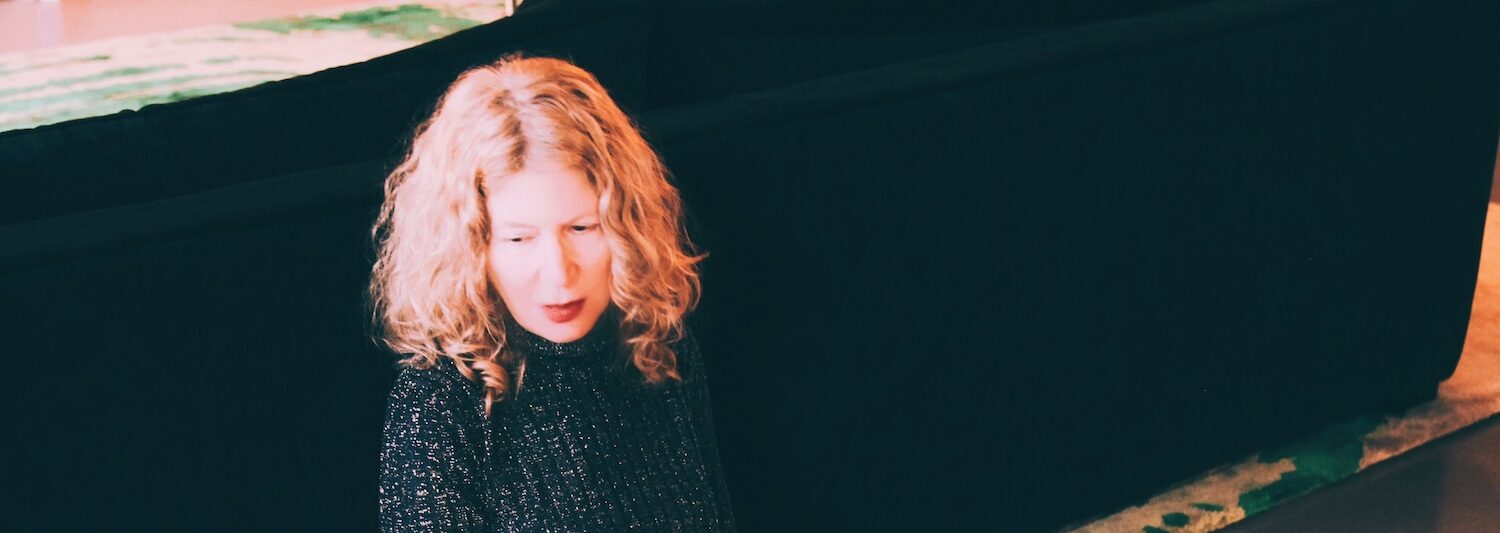
After more than two decades in Hollywood, two Emmy wins and a career spent bringing other people’s stories to life, Robin Schorr decided to write a new story of her own. At 58, she picked up a guitar, began writing songs and unexpectedly found herself at the beginning of an entirely different career. Now, as Blond in Car, the Los Angeles-based singer-songwriter is embracing creative reinvention, challenging ageist expectations and finding an audience in a generation that could be her daughter’s.
There is something wonderfully cinematic about Robin Schorr’s second act. Before she became Blond in Car, Schorr was a formidable presence behind the scenes in Hollywood, working as a film and television producer and earning two Emmy Awards along the way. She had spent decades helping bring stories to the screen, but somewhere along the way, the story she wanted to tell became her own.
The unlikely catalyst? Three guitar chords, a conversation with her daughter about The Alchemist, and a sudden realisation that she had another creative life waiting to be discovered. At 58, Schorr wrote her first song. What followed was a leap from Hollywood production into songwriting, sync licensing and, eventually, the wonderfully idiosyncratic indie-pop universe of Blond in Car.
Even the name has a Hollywood backstory. Originally credited as “blond lady in car” for a small acting role in a film she produced, Schorr tucked the phrase away, never imagining she would one day use it as her musical identity. Years later, it felt almost inevitable.
Then came My High GummyGirl, an unexpectedly viral moment sparked by a homemade Omnichord performance filmed in her kitchen. Suddenly, Blond in Car was finding an audience far beyond the one Schorr had anticipated, including a generation of younger listeners who embraced her music, humour and refreshingly unapologetic approach to ageing.
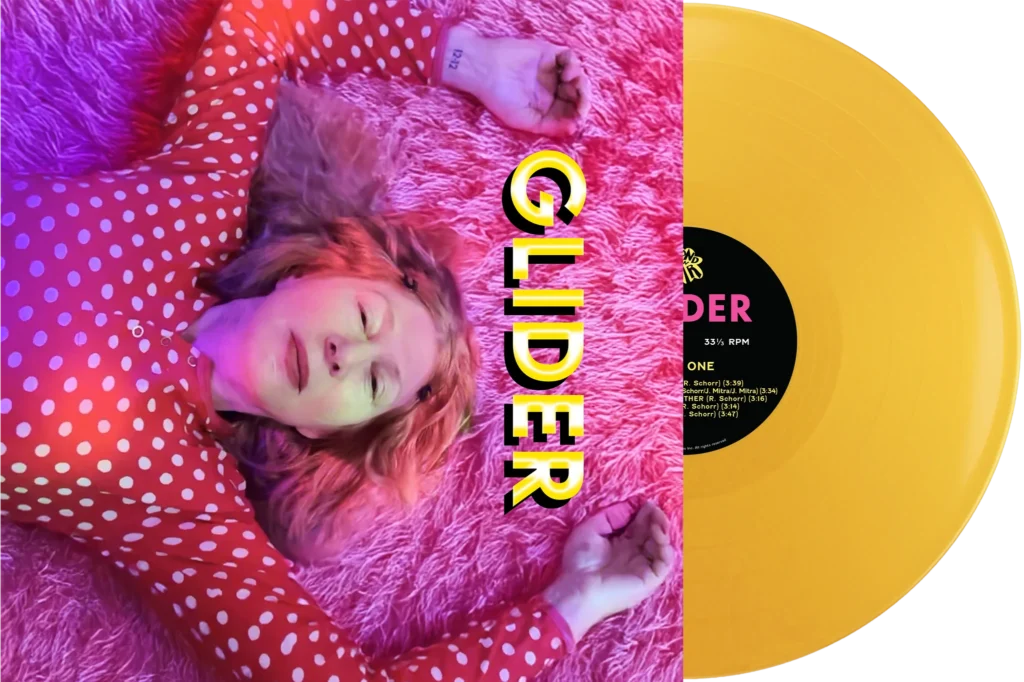
With her latest album, GLIDER, Schorr continues to explore family, longing, self-image and the beautifully complicated business of being human. Working with producer Melina Duterte, better known as Jay Som, she has embraced a more stripped-back and emotionally direct approach to songwriting.
In conversation with One Lash Shot, Schorr reflects on leaving behind a successful Hollywood career, discovering her purpose later in life, the unexpected kindness of the internet, and why she believes creativity has no expiry date. From the streets that inspired her album titles to the songs she hopes might make someone’s difficult day a little easier, this is a conversation about reinvention, resilience and the freedom of finally becoming who you were meant to be.
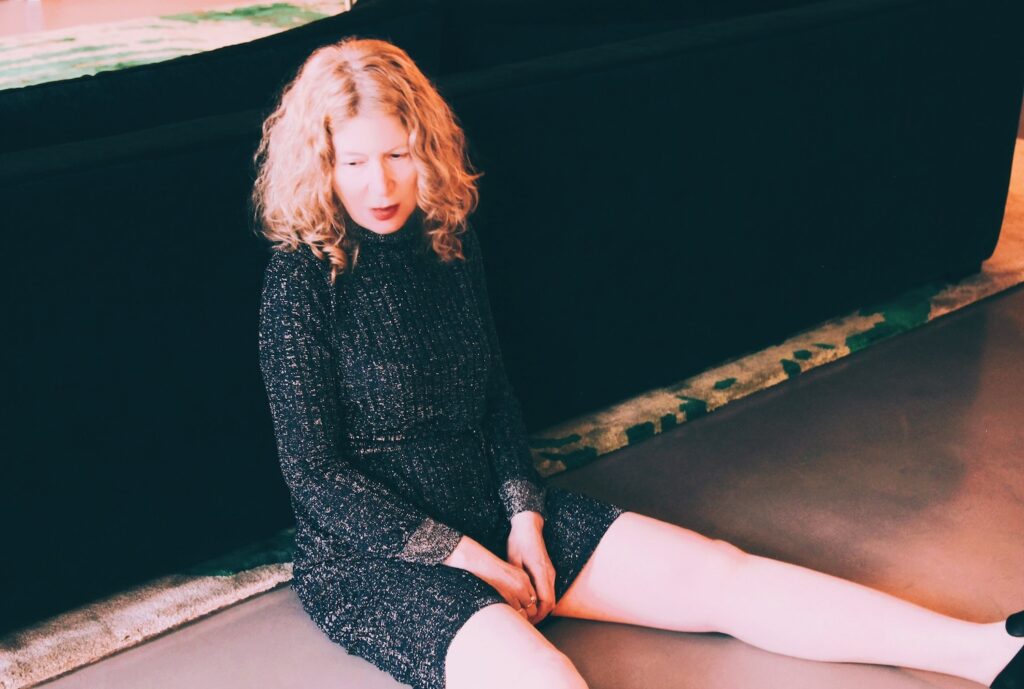
Let’s start with the name, Blond in Car. It originated from a film you produced, where your character was credited as “blond lady in car.” How did that unexpected credit eventually become your musical identity?
It was one of those moments where you go, “Ooh, that’s a cool band name.” I liked that the name has that LA mood thing — it’s a little glamorous, a little impersonal, a little lonely. All attributes that feel very LA to me, and as an artist and person, I feel I’m shaped by Los Angeles. So, I filed that away as a fun band name, never EVER thinking I would be in a band or have any reason to revisit it. But later, as things have evolved, when I started making music of my own, rather than writing songs for other people to sing, I immediately recalled that name. It felt like a very automatic decision.
After a successful Hollywood career as a film producer and two-time Emmy winner, you began your music journey in your late 50s. What inspired such a major reinvention, and did you ever have doubts about starting over in an entirely different industry?
I had climbed the ladder in film with great rigor, enthusiasm and ambition, and then it all petered out. Which was very strange, but I just lost my mojo for film. As that was happening, the inciting incident (as we say in film) was that my daughter was reading The Alchemist for school. But I could tell that she kept skimming. So, I said, let’s read it out loud to each other. We would read a chapter in her room, say good night, and I would go to my room and cry. Because the whole message of the book is how the whole point of life is to know your purpose and devote your life to it or you will die a coward. And I felt that film was not all that for me. So, I cried and meditated and, eventually, the one thing that came out of all that commotion was the desire to learn guitar. I had played classical piano all my life through high school and sang in choirs but had never learned guitar or banged out a pop song on piano. I had been an obsessed, lifelong indie music lover and fan and DJ, but never thought I was beautiful or cool enough to actually make music. When my then-husband taught me 3 chords on the guitar, I suddenly couldn’t stop hearing songs. I couldn’t sleep! It was like the floodgates had opened. I thought something magical was happening. Then I was driving on Olympic Blvd listening to country radio and had a huge lightbulb moment. I thought, “These people do not write their own songs! I could write songs for country artists!” and I came home and said, “I know what I’m doing with the rest of my life. I’m going to write songs for country artists.” I had not written one song yet. But when you know, you know. I quit film the next day and devoted myself to learning how to write songs. I wrote my first song at 58. I quickly went from country to writing for sync (songs for commercials, film, TV, trailers, etc.), which went very well for me very quickly. I licensed the first song I wrote for sync and won a bunch of songwriting festivals, and eventually that led to me writing my own indie pop songs as Blond in Car, which were more personal, quirky songs for me to sing. Something I never thought I would do in this lifetime.
In answer, I did climb a ladder in one field and start all the way at the bottom of another, and I know some people think that’s agony, but that kind of thing never bothers me too much. I was and still am excited to learn every new thing I can about music, from writing to production to live performance to marketing to equipment — I just love it all so much and feel grateful that I actually found the work I was made to do. To me, that is miraculous. I didn’t mind starting at the bottom because I was and still am so grateful that I finally found my purpose. I know that this is what I’m made for, and I love it.
You’ve become an advocate for embracing age and challenging the idea that creativity has an expiry date. Has finding music later in life given you a different kind of artistic freedom? What would you say to someone who thinks it’s too late to pursue a dream?
When I quit film and I would tell people I was quitting to become a songwriter, people seemed a bit sad for me or at least concerned — as though it was a silly dream and they didn’t want me to be hurt or embarrassed. I found it so odd that my news was always greeted with this distress. But I would say to people then, and it’s how I feel — I don’t know about you, but I only have one life and I am going to do everything I can before it’s over. The whole ageist bias that is so potent in our world is a big issue to me, and I want to show the world that being old is not boring, sad, or repulsive. I am fed up with old being a bad word — I don’t see it as an insult AT ALL, any more than to tell someone they are young is a compliment. It’s like saying you have a nose. It’s a fact. Another related fact is, now that I’m old, I’m happier than I have ever been in my life, way happier than in my 20s, 30s, 40s, or ever. I want people to see that that is very possible for them too. Of course, you have to be lucky with your health, which is true at any age.
Your song My High GummyGirl became a viral sensation after you shared a homemade Omnichord video filmed in your kitchen. Did you anticipate that moment would introduce your music to such a huge audience? And how did your daughter react to being the inspiration behind the song?
I never expected to have this level of popularity on social media. I had made a record, my last album ALTAVAN, and I wanted to promote it. So, I called all of the publicists I had known and worked with in film to see if they would help me with publicity. And they all rejected me and said, “You don’t need us, you need to improve your socials.” It was such a bummer! I knew they were right, but it was the last thing I wanted to hear. I wasn’t even on TikTok at the time, and I dreaded the whole thing. I expected the social media audience to be mean to me and insult me for my age and my appearance. Little did I know that the Blond in Car universe would turn out to be the sweetest ecosystem on the internet — it’s all kindness. I’m not sure why, but there are no mean people and no mean comments on Blond in Car Tok or any of the platforms. And the whole experience has made me come out about my age, after lying about my age since I was 17! There just was no way to keep hiding or lying. I now embrace it, thanks to social media and the kindness of the kids of Gen Z, who don’t hate old people. In fact, they love their grandparents and parents and Grace and Frankie.
Meanwhile, my daughter is somewhat blasé about my whole life as Blond in Car — she just finished college and is focused on starting her post-college life. But the fact that she is 23 and that she’s my darling has made it easy for me to relate to and vibe with all of my young fans and music friends who are roughly her age — it’s very familiar to me. I love their culture and aesthetic so much.
Your debut album, ALTAVAN, arrived in 2023, followed by your sophomore album, GLIDER. How has your sound and songwriting evolved between the two records, particularly working with 9 Theory on ALTAVAN and Jay Som on GLIDER?
I think my writing is evolving from less think-y, wordy lyrics to something simpler and maybe deeper. It’s not to take anything away from those wordy songs; I’m super proud of them and I love them. But it’s harder for me to say as much with fewer words, so I’m attracted to that challenge. A song like Shaky Day, which is one of my favorite songs on the album, is a good example of that kind of new writing. I loved working with both producers and would say that they have been consistent with these different phases in my writing. The production with ALTAVAN was maybe a bit more embellished, more clever or whimsical. The new album is more simple and certain. Also, Melina Duterte, aka Jay Som, who produced the whole album, was the first woman producer I have worked with, and I loved that — she made such crucial creative decisions on the album and really shaped the songs in ways I would never have done without her. We had live drums on almost every song, which was very cool and a first for me.
GLIDER explores family dynamics, longing, self-image and desire. What does the album title represent, and was there a particular emotion or personal experience you wanted to capture throughout the record?
GLIDER was the street we lived on when my parents got divorced. ALTAVAN was the street we lived on before that. I like naming these albums after streets that represent eras in my life. Those memories from those periods in my life definitely made me who I am, so it feels appropriate.
Several songs have fascinating stories behind them: Bad Dad explores inherited family dynamics and Come True draws on manifestation and your daughter. How do personal experiences and unusual observations become the starting points for your songwriting?
I think a lot about what subjects are worthy of a song. Maybe that’s because I started in country songwriting or because I then moved on to writing for sync licensing — because in both of those worlds, the “hook” or the subject (which is often the title of the song and the refrain of the chorus as well) is a very important aspect. In country songwriting, I would say it’s the most important part of writing — when you are in a session for country, you can spend 2/3 of your time hunting for a really good hook, and once you have it, the song just flies out. Bad Dad was like that — the minute I thought about it, I knew exactly what the song needed to say. I’ve spent a life insisting that my mean dad didn’t “win,” that he didn’t ruin me or make me hate men or myself or whatever. But the fact is — he got to me. And the fact is, when you have a bad dad, you’re 3 steps back; you’re at a disadvantage both in life and certainly when it comes to understanding/being confident around men. I had that thought and I wrote it down, and those are the lyrics right there. I don’t really think there is another song that I’ve ever heard that says that as plainly and truthfully. I love when songs come out that way and have something universal to offer the listener.
You’ve said Shaky Day is your favourite track on GLIDER. What makes that song particularly meaningful to you? And as you prepare to perform the album in its entirety at Zebulon on November 28, how are you feeling about bringing these songs to the stage?
I’m a mood swing kind of person, and it’s a pretty exhausting way to live. I had the idea for this song almost 6 years ago, even before I had started Blond in Car. I always loved the name Shaky Day because I love a song name that rhymes with itself, and I think this is a particularly good one. I wrote it two other times over the years, but was never happy enough with those versions. That is very unlike me; I only rarely abandon a song, and it’s even more rare that I pick it back up. But when I was writing for the album, I thought, let’s try again, and I was very happy with this version. It’s one of my favorite songs I have ever written because I think it’s a super beautiful melody, a very simple but deep lyric, and it is a song of maximum kindness, which is something I try to express. I truly believe that this song might really help people on one of those awful days, and that means a lot to me. I always dedicate this song to my big sister because she is always tasked with talking me down when I’m in a low mood. She always lightens me up because she has seen me high and low so, so many times, and she laughs at me — calls me the pendulum. She knows that the bad mood is as ephemeral as smoke, and I am happy she loves the song. I always dedicate it to her at shows.
I am excited to play the whole album in order at my album release shows because there are always those songs on an album that are not the singles, and they never get played live. I love all of the songs on all my albums, and on GLIDER, there are some favorites, like the Beatles-esque Looking for Proof and the big dreamy song, Eyeshadow Blue, that sound so cool live, and I’m very happy to give them their moment.
Having worked behind the scenes in Hollywood for so many years, you’re now building an entirely different creative identity through Blond in Car. Looking back at your journey from filmmaking to music, what do you hope people take away from your story — and what’s next for Blond in Car?
I’m excited for the next chapter in all ways. I did a lot of touring in 2026, and I hope to do even more in 2027 — it’s my dream to go to Europe, where I have a lot of fans. I am also super excited to write a new album and go back into the studio. Songwriting is my favorite thing in this world — it’s profound and blissful and mysterious. When you release a record, you spend so much time trying to promote it and spread the word about your shows and singles that you stop creating new music. I miss that!
I would love for people to see me as an example of a different way one can live life in later years — running around being curious, always loving art and creativity, and always hunting for fun vintage clothes and the beautiful treasures that are everywhere! There are many ways to be old, and rather than succumb to the stereotype, let’s all have fun and be as alive as we can be while we’re here on this beautiful planet.

 Lakshmi