 Lakshmi
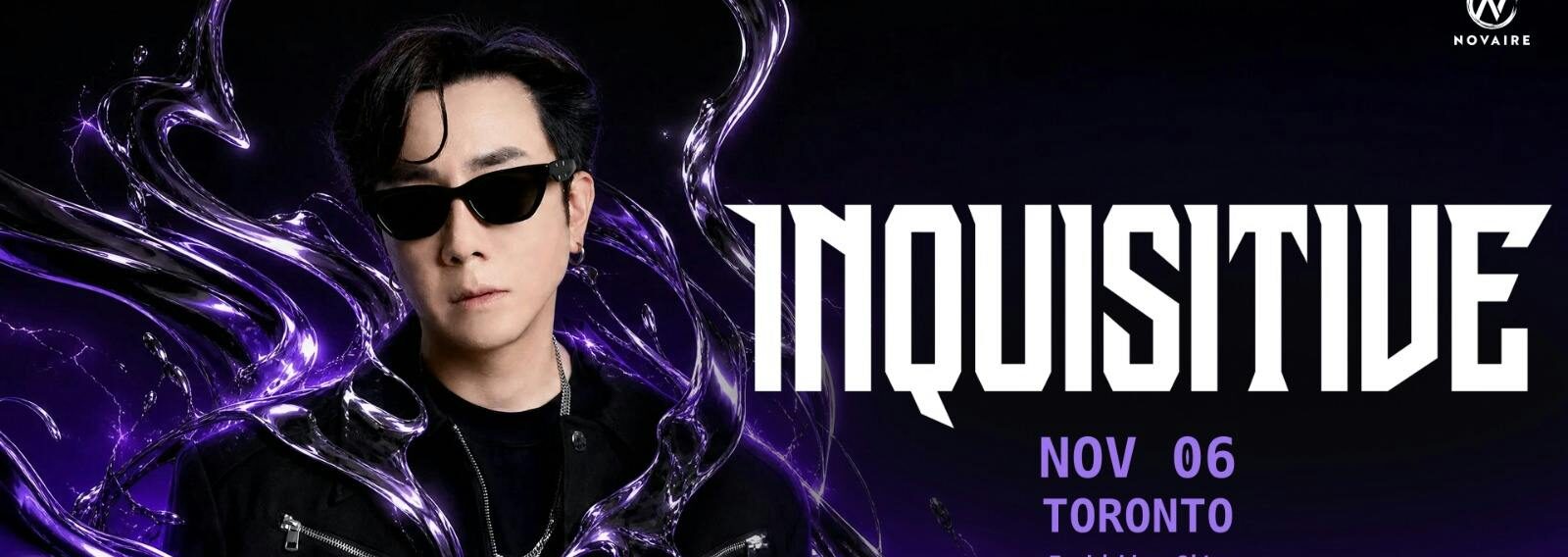
What happens when the familiar melodies of Asian pop and C-drama soundtracks collide with the relentless energy of hardstyle? For Singaporean DJ and producer Leon Lucas Ho, popularly known as Inquisitive, the answer lies in reimagining the music audiences know and love. Blending Asian musical influences with hard dance and electronic sounds, Inquisitive has carved out a distinctive identity that has taken him from Singapore’s turntablism scene to international festival stages.
A three-time Singapore DMC Champion, Inquisitive has built his career on experimentation and a refusal to be confined by genre. His independent releases and viral remixes have introduced Asian music to unexpected audiences worldwide, with his The Pursuit of Jade remix in particular sparking an international following.
In conversation with One Lash Shot, Inquisitive reflects on his musical journey, the cultural influences behind his sound, and the unexpected global reach of his C-drama remixes. We discuss creative independence, the evolving relationship between music and technology, and why he believes there’s room for a C-drama rave on the international club scene.
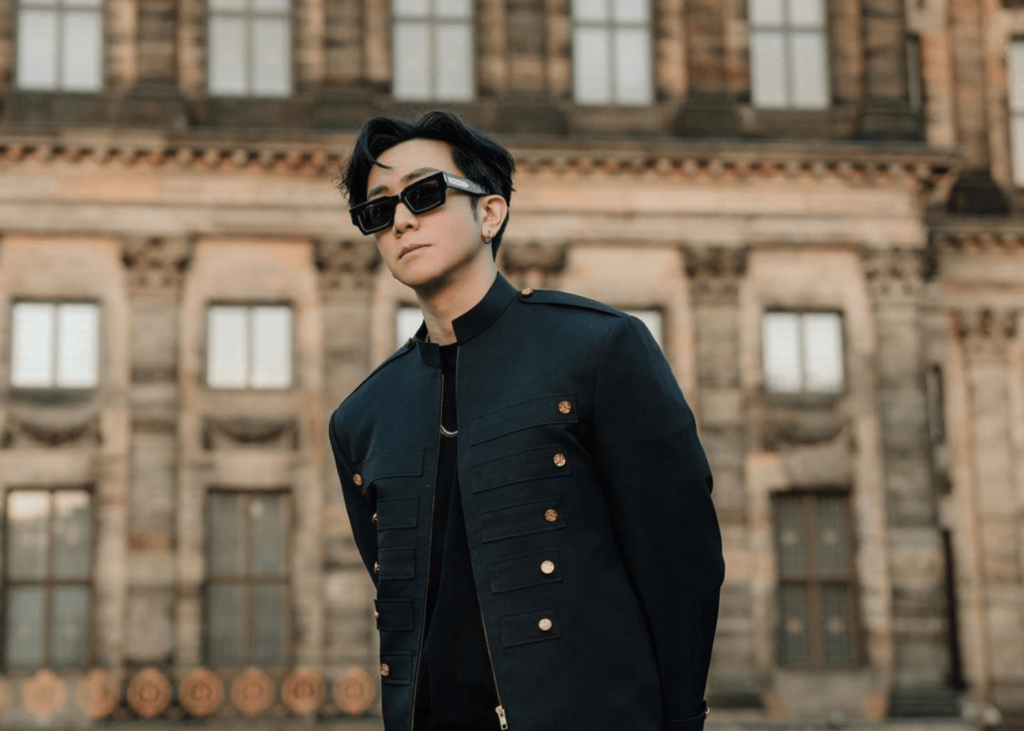
Let’s go all the way back to 2004. Before the festival stages and DJ decks, you were an aggressive inline skater. You discovered turntablism through the music in extreme sports videos. Do you remember the first time you heard those scratching sounds and thought, “I want to learn how to do that”?
Yeah, I was watching back then, when it was still VHS, almost all the way until the transition to VCDs.
I was just watching random skate videos featuring my friends. Naturally, skate videos were heavily influenced by hip-hop. They had hip-hop tracks, along with scratching sounds.
I was really intrigued. I thought, “Wow, this sounds cool. I want to learn how to do that.”
And, naturally, being part of the skate industry, many of my friends were skaters, and some of them were breakdancers, right? A few of those breakdancers also knew DJs, so they introduced me to a DJ in Singapore named Andrew Chow. That’s how I started learning from him.
Oh, he was your mentor then?
Yeah, he was my mentor.
You went on to win the Singapore DMC Championships three consecutive years in a row, from 2006 to 2008, and eventually represented Singapore at the DMC World Championships in London. When you look back at that younger version of yourself, what do you think he would say if he could see where you are today?
Of me?
Wow, I don’t know. I think he’d be very proud. I mean, it’s been a long, long, long journey.
I think he’d be really proud because I’ve been through almost every aspect of DJing. Back then, we didn’t have AI or the technology and software we have today. When I started, it was straight-up vinyl.
We didn’t have CDs or anything. It was really hard to even find songs. You’d go to the record store and search for them, and when you finally found one, you’d think, “Wow!”
That little thrill of finally finding a song and being able to play it was incredible. Now, you can just download music. Yeah, I think I’d probably be really proud of myself because I never expected to be making my own music and touring.
Actually, all I wanted to do was win the DMC Championships and show my friends that I had this cool hobby. But somehow, it got me here, so it’s pretty crazy.
And as you mentioned, you trained in old-school hip-hop scratching and R&B under your mentor Andrew Chow. Then came London, which completely changed your musical direction. What was it about the UK’s rave scene that captured your imagination? Was there a particular DJ, track or experience that made you realize you wanted to take a different path?
I didn’t know who the DJ was, but when I went to the after-parties for the DMCs, they were held at this place called Fabric Live. I don’t know if it’s still there, but it was a really huge club with different levels, each playing different genres of music. So, I went into one particular room.
Back in Singapore, when I was learning to DJ, the mindset was that if you played hip-hop, you were a hip-hop DJ, and if you played house, you were a house DJ. Everything was very confined to its own bubble.
But when I went there, I was blown away by this DJ. He played rap metal. I remember the exact song: Killing in the Name by Rage Against the Machine, mixed with a hip-hop track. Then he played hip-hop vocals over breakbeats and drum and bass.
Drum and bass were really big in the UK, along with UK garage and other genres. That experience opened my eyes. I thought, “Wow, you can actually do this? I’ve never heard anything like it before.”
So, when I went back to Singapore, I thought, “I’m going to start experimenting. I don’t care. I’m not going to call myself a hip-hop DJ. I’m just going to play what I like.”
I started mixing rock with hip-hop, rock with breakbeats — anything goes. And that’s where we are today, with everything all blended together. I don’t know who that DJ was, but he’s a legend.
As you spoke about mixing genres, you’ve developed a very distinctive sound by bringing together European hardstyle and hard dance with Asian musical influences. When did you first realize these two seemingly different musical worlds could work together?
I didn’t really have a clear idea.
But back then, I was listening to a lot of this DJ called KSHMR. I think he has Indian roots, and he incorporates Indian samples into EDM.
He takes all kinds of sounds, samples them and turns them into EDM. I thought, “Wow, this actually sounds really good!” Then I thought, “Okay, but no one has really done this with Chinese music.”
So, I wanted to become the Chinese KSHMR — remixing Chinese songs and blending Asian influences with modern Western beats and hardstyle. And yeah, it went pretty well.
You’re BLACKPINK Kill This Love hardstyle remix reached millions of listeners. What’s the creative process behind taking a globally recognizable K-pop song and transforming it into something that can shake an entire festival stage?
So back then, I had just gotten into hard dance and started producing a lot more tracks in that genre. Then I heard the BLACKPINK song, and I was like, “Wow!”
For me, as a producer, when I hear something, I sometimes instantly get an idea. That’s just how my mind works. When I heard the song, I thought, “Dude, I have an idea!” So, I went home, spent about four to five hours working on it, and finished the entire track because I already knew exactly what I wanted to do with it.
And this was around 2018 or 2019, I remember. It was the beginning of K-pop’s rise. It hadn’t really exploded globally yet, and BLACKPINK was still relatively new.
So, I thought, “Why not put out my first-ever K-pop remix?” And I did. Back then, not many people were making K-pop remixes. People weren’t really into K-pop; they preferred listening to more Western music. It was still quite niche.
But look at where K-pop is today. It’s crazy!
You’ve worked with K-pop, Mandopop and C-drama soundtracks. When you hear an Asian pop song, what makes you think, “This would make an incredible hardstyle track”? Is it the melody, the vocals, the lyrics or simply a feeling?
For example, with what I did with the song First Love, I was drawing on the music I grew up listening to. I don’t know if you remember a band called SPEED. I think they had a song called White Love.
That’s the kind of music I grew up with. Back then, K-pop wasn’t really a thing yet; J-pop was the big thing. So, a lot of these songs are from my childhood, and I always thought that one day I’d do something with them.
Now that I have the skills and experience, I want to revisit those memories, dig out my old CDs, rediscover all those songs and try to do something with them.
But a lot of it is also driven by fans. Most of the requests I get these days are from C-drama fans. They’ll say, “Hey, can you do this?” It started with one C-drama, The Pursuit of Jade, and now everyone is making requests. They’re like, “Do this! Do that!” And I’m like, “Okay, I think I have to!”
You also probably grew up with other singers, like Leslie Cheung and Anita Mui?
No, Leslie Cheung and Anita Mui weren’t from my generation. They were from my dad’s time.
My parents have a very strong connection to Cantonese and Hong Kong culture, and they speak Cantonese at home. So, growing up, I was familiar with all these songs.
They would say to me, “Hey, you’re making Chinese music remixes, so why not do some Cantonese songs?” And I thought, “Okay, why not?” So that’s what we’re doing.
Your independent single Divine Yasha became the first hard dance track by a Singaporean artist to surpass one million Spotify streams, followed by tracks such as Fairy Dynasty and Bu de Bu Ai. What did that milestone mean to you personally, and did it change how you viewed the international potential of Singaporean electronic music?
Yeah, it was a huge milestone, especially as an independent artist. I had sent Divine Yasha to so many record labels, but they kept rejecting it. They didn’t like it or want to release it.
So, I thought, “Okay, I’ll put it out and market it myself.” And then, bam! We hit a million. I think it took about five months. The song also got picked up by a playlist, which helped. My idea was to bring Asian culture together with hardstyle, psytrance and other genres, and people really connected with it.
I think it showed that, especially in this day and age, you can do your own thing and release your own music. If you believe in what you’re making, put it out there. Labels can sometimes have a lot of control over your creative direction. They’ll ask you to change this or that, and by the time the song is released, it doesn’t even feel like yours anymore. It becomes the label’s song.
I think that gave a lot of Singaporeans the confidence to release their own music. That’s what we’re seeing now. Many of my friends and fellow DJs in Singapore are putting out their own material instead of waiting for record labels.
Nowadays, there’s something called a mechanical license, but you can’t simply use the original recording. Instead, you can release the song as a cover by having someone perform the vocals.
Whenever I release these songs, everything is re-recorded from scratch. I get musicians to play the guitar, piano and other instruments, and we record everything ourselves before releasing it as a cover.
Even the vocals? What about Her from The Early Spring soundtrack?
Everything, yeah.
The vocals are actually performed by someone else, not Liu Yuning. And now, with AI, you can do both. You can use AI and combine the two approaches. It creates a different sound.
It’s crazy.
Your remixes of the C-drama soundtracks from Pursuit of Jade and The Early Spring have introduced these melodies to an entirely different audience and musical setting. What drew you to these particular soundtracks, and did you anticipate the response they would receive?
I was just watching shows with my wife, random stuff like Crash Landing on You and The Pursuit of Jade. Then I kept seeing this guy on my TikTok, and I thought, “Hey, this sounds catchy.” So, I decided to put something out. I was actually on a plane when I made it.
I thought I’d just put out a 30-second clip. I hadn’t even finished the track. I made the clip, added it to my video, and posted it.
When I landed, I was like, “Dude, there are already 50,000 views! What’s going on?” My wife was like, “Dude, you need to finish it! You need to finish it!”
So, I was like, “Okay, damn!” and finished it and put it out. It was crazy.
Everyone was saying, “Dude, this has gone viral! Super viral!” I had no idea how it happened.
From there, of course, people started saying, “Hey, you should do this. You should do that.”
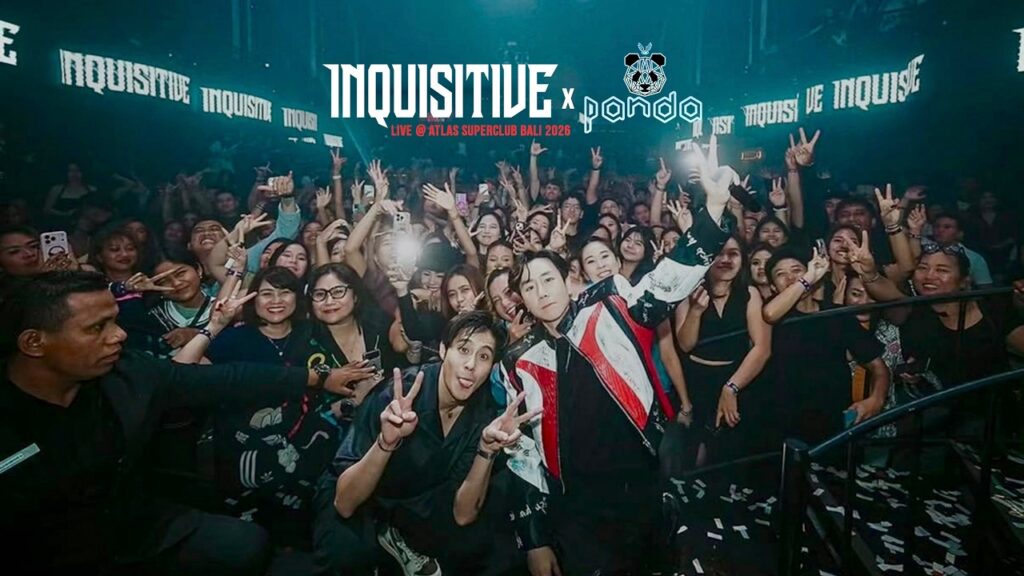
That song also brought me so many new followers from places I’d never expected, like Brazil, Chile, Peru, and Romania. People were saying, “Dude, come to Romania! Come to Brazil!” And I was like, “What? Is this real?” I genuinely thought they were scam or fake accounts. I couldn’t believe people from Brazil were actually reaching out.
But after I kept posting more videos, I realized it was real. I was like, “Dude, this is crazy!” Then my friends started telling me, “Hey, dude, The Pursuit of Jade is number one on Netflix in Brazil.”
That’s when I understood what was happening. I was like, “Okay, I started this whole trend!”
So, in the near future—and I’m saying it here first—you’re going to see a C-drama rave, because no one has done it yet.
I would love that.
Yeah, so we put out The Pursuit of Jade remix. Unfortunately, a lot of people don’t know this, but the whole thing went super viral.
The TV company actually reached out to me. They emailed me and said, “It’s copyright. You have to take it down.”
They actually said that?
Yeah, I received an email.
And then?
I had to remove the song.
That’s why it’s not on Spotify anymore.
Oh my God.
That’s why. I couldn’t post it because they said it was copyrighted.
But that just shows how viral it had become. They knew about it!
Do you think C-dramas and their soundtracks are becoming an important gateway for international audiences to discover Chinese music and wider Asian pop culture? And do you see yourself exploring more drama soundtracks in the future?
Yeah, of course. I think that, especially in Singapore and across Asia, the clubbing scene can feel repetitive. It’s always the same music and the same people.
I think this kind of party could be similar to an anime rave. A lot of people have already organized anime raves, where people dress up as characters like Naruto and go out partying. They’re fun, and you see them happening everywhere, even in the US.
But no one has really done a Chinese drama or K-drama rave. So, you could go there, dress up, enjoy the music, and be part of that whole experience.
I think there’s definitely something there.
People see the high-energy DJ performing in front of thousands of people, but what is Leon like when he’s away from the decks? Are you just as energetic in everyday life, or is there a quieter side of you that your audience rarely gets to see?
I’m actually an introvert. When I’m at home, I don’t really go out. I just spend time with my wife and our cat. I’m also a huge gamer, so I play video games and go to the gym. I don’t really go out much. I just focus on making music.
I’m always thinking about what’s next. When I get home, I’ll probably rest for a few days, go to the gym, watch TV, and play games. After that, it’s straight back to work.
I’m always planning something, whether it’s my next tour set, new remixes, or visuals. There’s always something in the works.
So, yeah. But when my wife and I are together, we’re crazy!
Do you handle everything yourself, from the remixes to the visuals?
I actually edit all my own visuals. For example, if you see the C-drama visuals tonight, I edited those myself.
But the 3D visuals, like my logo and everything, are done by my VJ. He handles those.
If you could collaborate with absolutely anyone in Asian music — a K-pop group, Mandopop legend, C-drama vocalist or another electronic producer — who would you choose? And what would that collaboration sound like?
Wow, there are so many! I think I have to say JJ Lin, because he’s a fellow Singaporean. Jay Chou, of course, and the band Mayday.
Maybe F4, too? There are so many, man. Honestly, almost anyone. I don’t know!
What’s next for you?
What’s next? I’m planning another big tour next year, this time in a major arena.
Really? I wouldn’t say where just yet, but yeah, it’s going to be something special.
So, I’m currently planning everything, including the merchandise. After this tour, I’ll head back, sit down with my team, and start putting everything together.

 Lakshmi