 Lakshmi
Known for his delicate observations of human relationships and the quiet emotions found in everyday moments, filmmaker Kim Jong Kwan has developed a distinctive cinematic language centered on intimate encounters, conversations, and the emotional landscapes of ordinary spaces. Through features such as The Table and Shades of the Heart, as well as his collaborations with IU, including his direction of the segment “Walking at Night” in the Netflix anthology series Persona, Kim has continued to explore the subtle connections between people—the words exchanged, the silences shared, and the memories that remain.
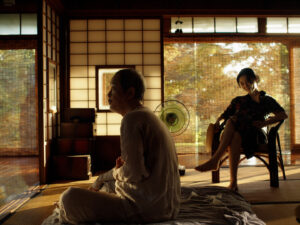
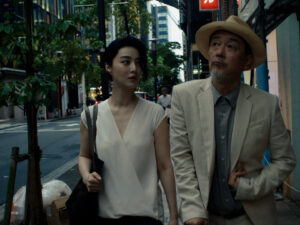
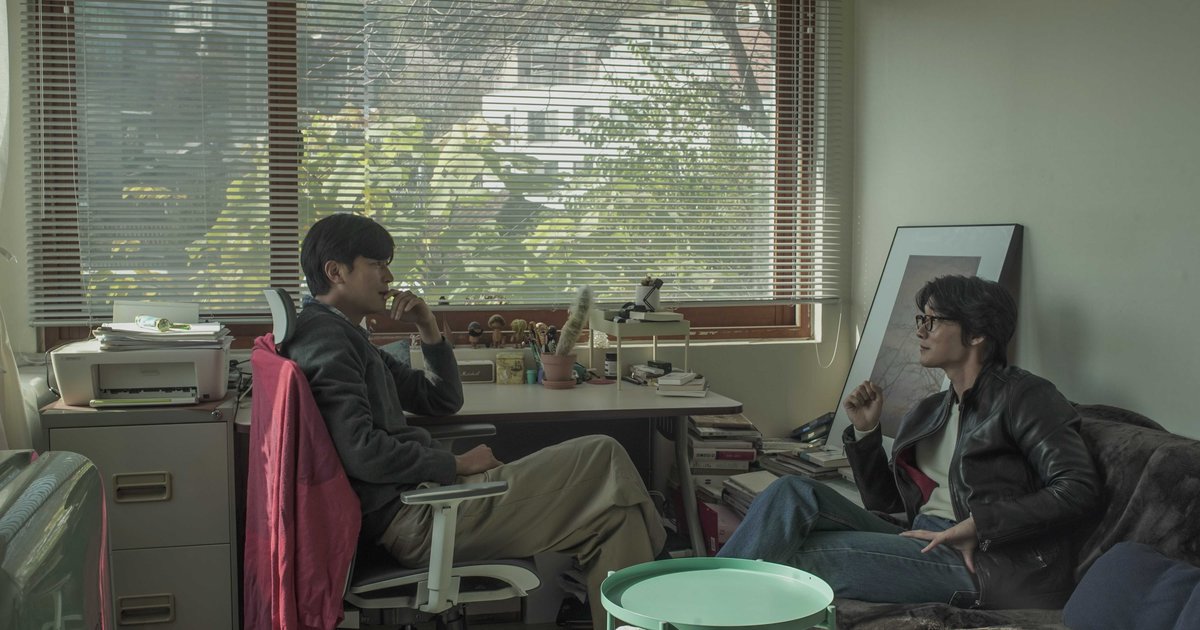
His latest feature, Frosted Window (2025), returns to the anthology format that has become an important part of his filmmaking. Set in Seoul’s Seochon neighborhood, the film follows different stories unfolding within the same space across changing seasons, capturing the passage of time and the emotional traces left behind by the people who inhabit it.
In this interview with One Lash Shot during the New York Asian Film Festival (NYAFF), Kim discusses the personal origins of Frosted Window, his fascination with dialogue-driven storytelling, his process of creating scenes through collaboration with actors, and his desire to continue exploring seasonal filmmaking as an ongoing form of storytelling. At the center of his work remains a lasting question: how can a story capture our attention, create emotional connection, and reveal something about the world we live in?
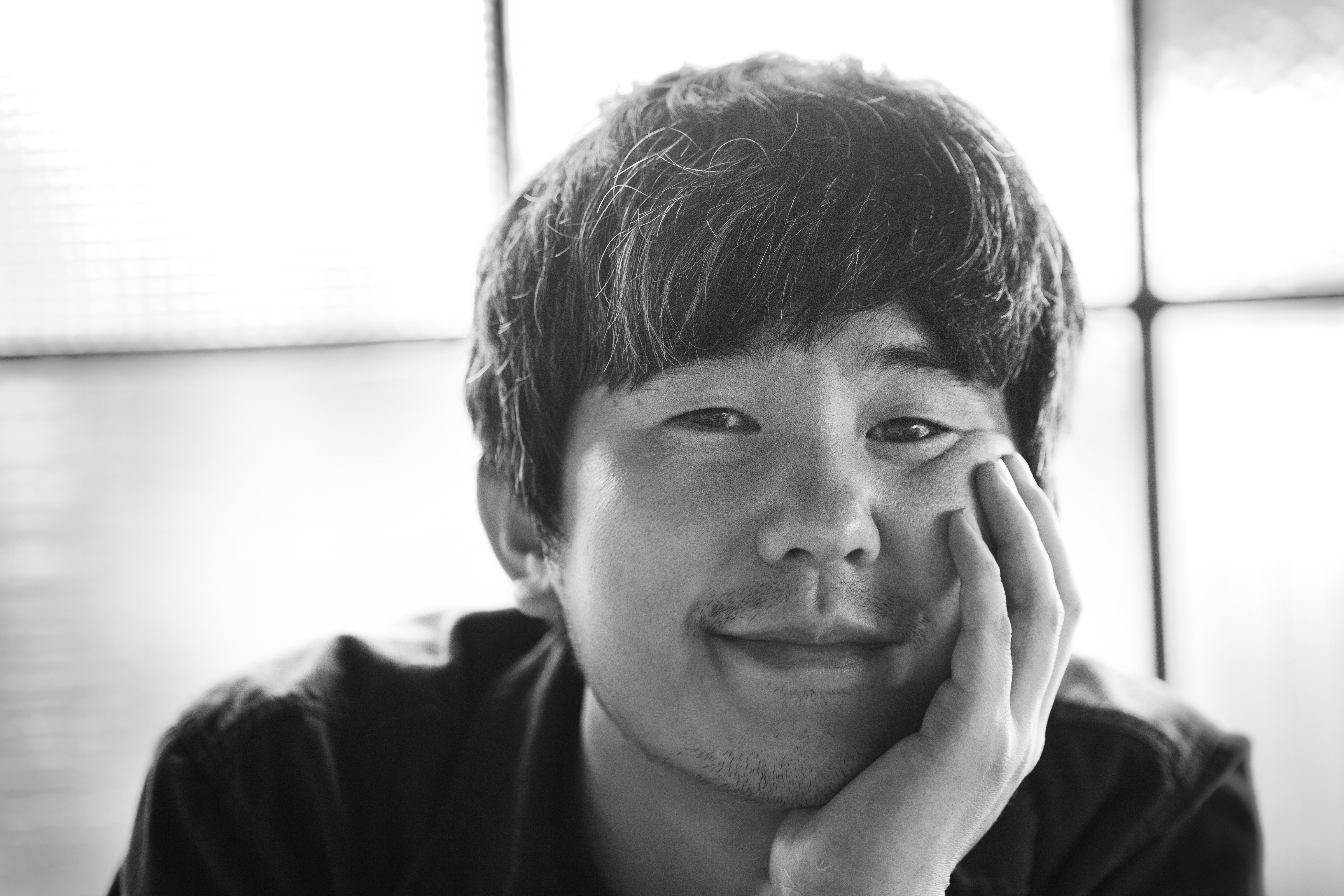
Can you take us back to the beginning—what was the moment or experience that made you realize cinema was the path you wanted to pursue?
Long story short, my only joy growing up was watching films. It was my main hobby. I grew up with a lot of cinematic imaginings and ideas. When I was young, I wanted to make films. But my family was poor, so it was hard for me to start studying filmmaking. I grew up in a household that, you know, wasn’t very well off socioeconomically. So, it was difficult for me to study filmmaking earlier in life. In my 20s, I worked as a truck driver and was able to save some money while driving. But I never stopped thinking about going to film school. Finally, in my mid-20s, I was able to go and study filmmaking.
Another interesting thing is that when I first started making films, I really liked Smoke by Wayne Wang. When I was learning about filmmaking, that film helped me a lot. So, I started thinking about making a movie like Smoke, but set in Korea. The film I brought here came from that idea. In my mind, I was thinking, “What if I made Smoke—a more Korean version of Smoke?”
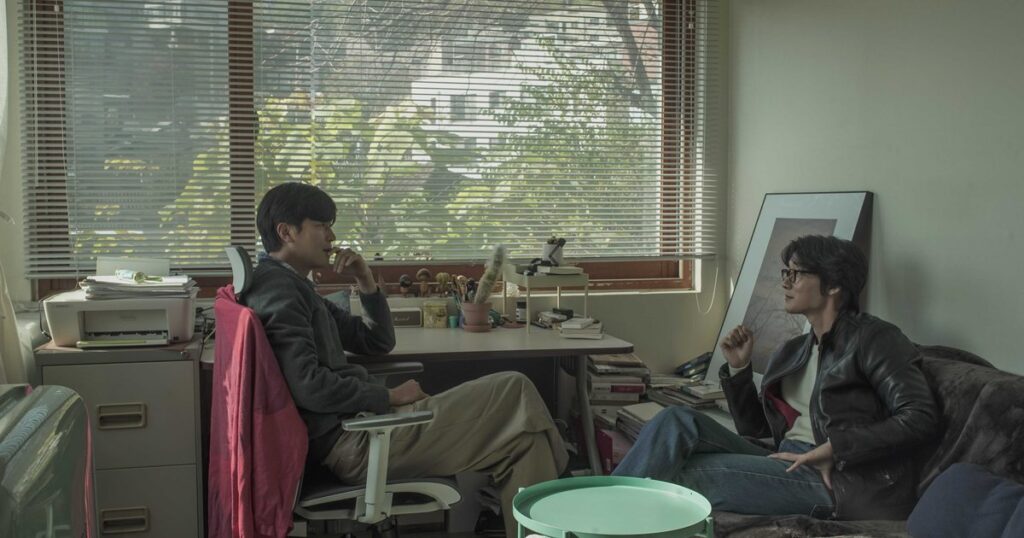
Frosted Window is divided into three distinct chapters—Out Walking, Breather, and Mari—each unfolding across changing seasons and emotional landscapes, with Seoul’s historic Seochon neighborhood acting almost as a character itself. What drew you to the anthology format, and how did Seochon become the emotional and visual thread that ties these stories together?
So, I would say I usually enjoy working with the anthology format. About 70–80% of my films are set in the Seochon neighborhood. I think one of the things I really enjoy as a filmmaker is finding a sense of present-day resonance in the places and the time that we live in. So, I like to spotlight places that I know very well.
I’ve also always enjoyed working in a format that centers on dialogue between two people. My first feature to use this format was The Table. Basically, there’s a café, and the film takes place from morning until night. It’s almost like theater, where two people come in and have a conversation, then another pair comes in and has a conversation, and the film follows that rhythm. Another one of my features is Shades of the Heart. It has a similar format, in that one person meets several other people and has conversations with them.
So, I think Frosted Window is the culmination of these cinematic elements that I really enjoy working with: the anthology format and dialogue-centered storytelling. With this film especially, I wanted to center the place where I live—the neighborhood that I know best—and create something more personal. I wanted it to be an anthology of stories that take place over the course of a single day, but across several different seasons, almost like a novel.
In Shades of the Heart, you anchored the story through one protagonist’s encounters across a single day. Frosted Window takes a very different approach, unfolding through three distinct stories across changing seasons. What drew you to this more fragmented way of telling a story, and what did it allow you to explore that a single perspective couldn’t?
So yeah, you’re absolutely right. I think one of the things that differentiates Shades of the Heart from Frosted Window is that, in the former, one person meets multiple people, and through those conversations, the protagonist’s inner world changes. That’s what I wanted to highlight.
Whereas in Frosted Window, I think the story is really the story of the location itself—the space. That’s why I wanted to bring in the changing seasons and showcase them.
I think the feeling I wanted to create with Frosted Window was that of a novelist. When a novelist writes a story, there may be different styles or different kinds of storylines, of course, but there is still a central voice that runs throughout the novel. I think that’s the kind of feeling I was looking for.
This marks your third collaboration with Yeon Woo-jin, following The Table and Shades of the Heart. Having worked together across several deeply introspective films, what is it about your creative partnership that continues to evolve, and why did he feel like the right actor for Frosted Window?
Yes, I met this actor when I was making The Table, and that’s when I realized, “Oh, this person is a great actor.” As I mentioned, a lot of my films feature a lot of dialogue. In dialogue, one person is talking while the other person is listening and I realized that Woo-jin is a really great listener.
Because they’re such a great listener, they’re able to lead these dialogue scenes really well.
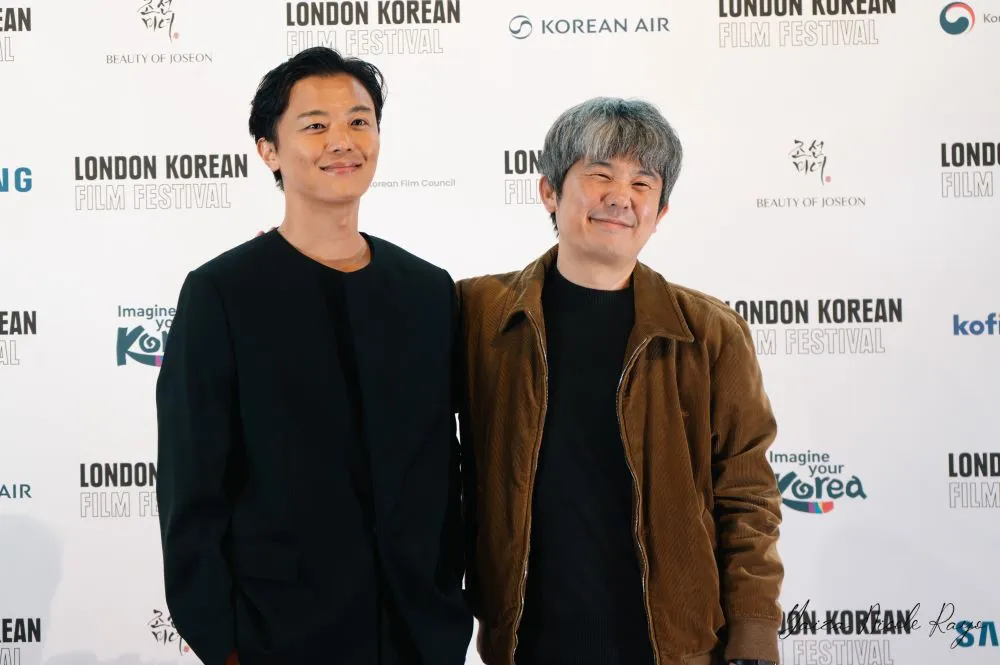
In Shades of the Heart, the character has several conversations with different people, and through that film, I think I was able to solidify my trust in Woo-jin’s work and acting abilities.
In The Killers, the role was quite different—he played someone who had been bitten by a vampire. With Frosted Window, I really wanted to showcase a different side of him. I think he has a certain attractiveness, a kind of sexiness, and I wanted to bring that out as well.
What were some challenges you faced while making this film?
It’s a film that I worked on with a very small crew. If there were any difficulties, it was the fact that I didn’t receive any investment. I made it with my own money. That was the most difficult part.
The film unfolds across three seasons, and if you include the intro, there are four. We had to shoot each section in its respective season, so there were some practical challenges because of that. It was one of the biggest challenges of the whole process. And because the film unfolds across several seasons, every time we started shooting again, we had to hire staff and crew members. Sometimes that created logistical difficulties as well.
Out of the three films – Out Walking, Breather, and Mari, which one do you prefer the most?
That’s a very hard question for me. I would say it’s a very sensitive topic, just because the actors who appeared in this anthology film might see this interview. If I pick one, I feel like some feelings might get hurt. So it’s a very difficult question to answer.
But I will say that the scene I remember most is the final scene of the film, where Mari is holding flowers in the street. I remember thinking, “Oh, this should be the ending of the film.”
I’ll be working on a variety of projects in the future, but this was a very personal work for me, and I want to keep making films like this. My plan is to make one film each season, and when I have enough of them, I’ll compile them and release them as a feature film. I think my next project will probably be made in the same way. I really enjoy working in this style—filming something as the seasons go by, then bringing those pieces together into a feature. I think my next work is going to be in a similar vein as well.
Was there a particular scene in Frosted Window that holds a special place for you—perhaps a moment that was especially memorable to shoot or meaningful to create?
Like I mentioned, I definitely felt an emotional resonance with Mari’s final scene in the last part of the film. From the beginning, I imagined that as the place where the film would end.
But I would say the process itself was a lot of fun because we shot it very freely. This movie was made in a very free-spirited way. I didn’t think too much about continuity. Instead, I went to places that I knew very well and designed the scenes while talking with the actors in those spaces. Because of that, there was a strong sense of realism, and I had the most fun filming the scenes where I could really feel that realism.
You’ve already hinted at your next project. Can you share more about what you’re hoping to explore in your next film?
Yes, I’m preparing a commercial film. But other than that, I’m also working on the project I hinted at earlier. I think it would be something like a seasonal film or a film of the seasons. The cast has already been decided, but we haven’t officially announced it yet, so I can’t share those details just now. Sorry about that. We’re going to start filming this fall and continue through the winter, shooting it little by little as the seasons change.
The other film I’m working on is a Japanese production. The official details haven’t been released yet either, but I’m hoping they’ll be announced soon.
With Japanese actors or Korean actors?
Maybe all Japanese actors.
If you had to describe Frosted Window in just one word, what would it be—and why?
I think if I were to encapsulate this film in one word, it would be “story”.
The reason is that, for me, everything comes back to storytelling. What really motivates me is the question of how a story captures people’s attention and makes them believe in it. That’s the central question I’m exploring. This is just one film, but I’m planning to continue it as a series. I’m hoping that, once these films accumulate, people will be able to watch the series as a whole and see the larger story that emerges from it.

 Lakshmi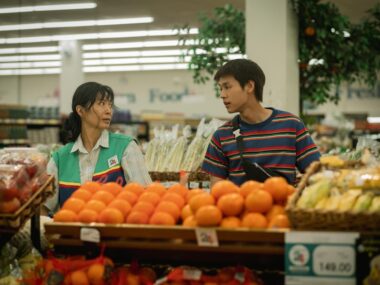


-2-300x225.png)