 Lakshmi
Ben Gregor is the kind of director who seems to have carried a sense of playfulness with him from the skate parks of London to some of the biggest sets in British film and television. A BAFTA-nominated director and writer, Gregor has built a career on combining striking visual style with sharp comedic timing, whether directing hundreds of commercials, award-winning television or, most recently, the ambitious fantasy adventure The Magic Faraway Tree.
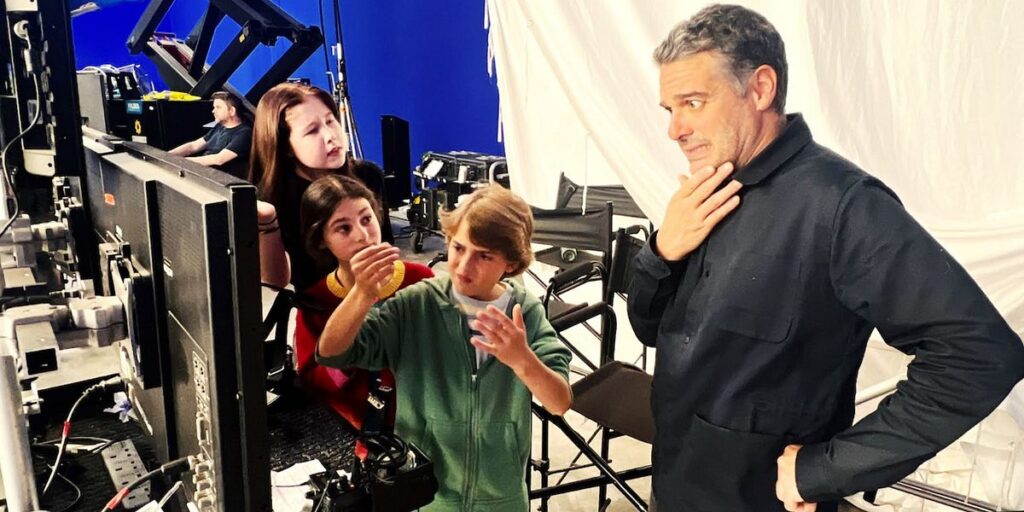
That instinct for play is perhaps best summed up by Claire Foy’s description of him as a “giant child” on the set of The Magic Faraway Tree—a quality that reflects Gregor’s belief that silliness and freedom can bring out the most genuine performances, particularly from young actors. Away from the camera, his interests are just as eclectic: a lifelong skateboarding enthusiast, he speaks fluent Japanese and proficient French and is reputed to have the unusual habit of eating lunch at precisely 11:00 am.
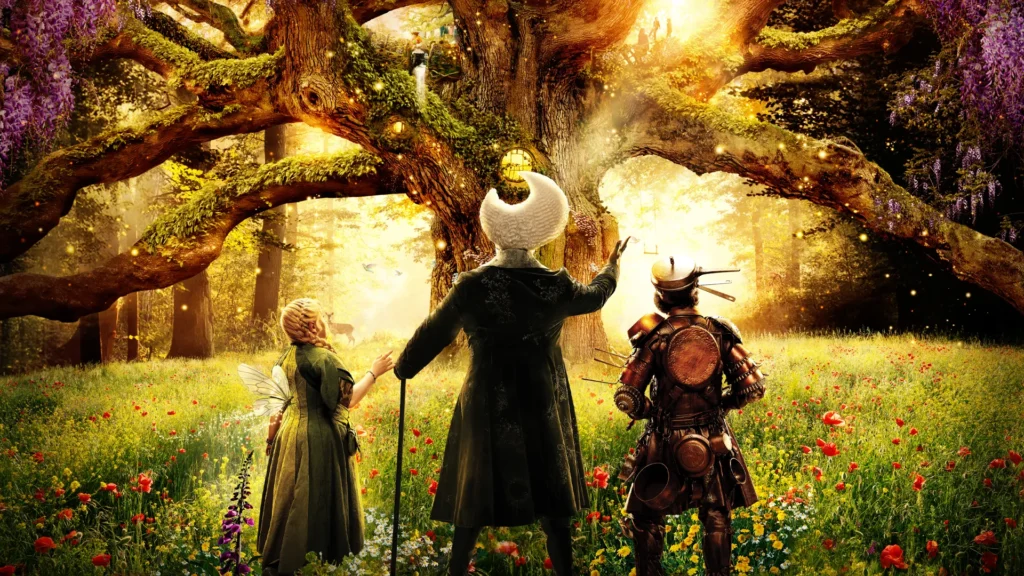
Based on Enid Blyton’s classic, The Magic Faraway Tree follows Polly and Tim (Claire Foy and Andrew Garfield) and their three children as they discover a magical tree filled with fantastical worlds and eccentric characters. Along the way, they encounter Silky (Nicola Coughlan), Moonface (Nonso Anozie) and Saucepan Man (Dustin Demri-Burns), as a series of adventures brings the family closer together.
Now, with The Magic Faraway Tree marking a major new chapter in his career, One Lash Shot sat down with Director Ben Gregor to talk about filmmaking, Enid Blyton, creativity and the art of keeping a little bit of playfulness alive on set.
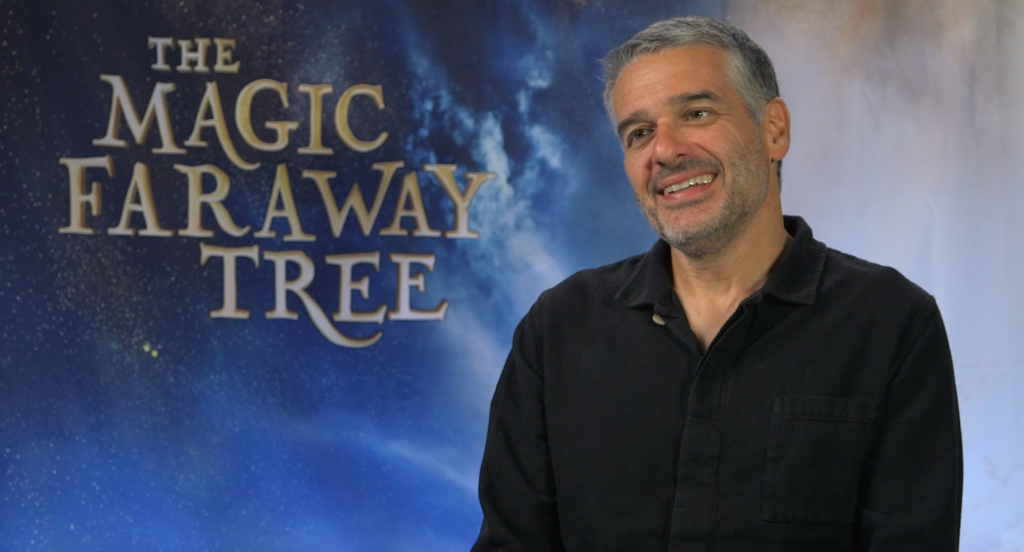
Do you believe in fantasies and magical lands?
I think the whole team behind The Magic Faraway Tree believes in magic. And there was a real magical atmosphere in how we both prepared for the movie and how we made it.
And I think it was infectious for the kids and the performers. And there was a really strong feeling of invention. We invented new techniques to manifest the worlds.
And we just invented stupid games. And we were playing them every day on this film. And I think it shows.
What did you feel when you first read Enid Blyton’s series, and what was it about those books—their characters, their world, or the nostalgia they evoke—that made you want to bring them to the screen as a film series?
I think it’s timeless, amazing work. Enid Blyton is a fantastic writer and so imaginative.
And Simon Farnaby, who wrote Wonka and Paddington 2, that combination is a very strong combination. And the producers behind the film, Neil Street Productions, Pippa Harris, Sam Mendes, Nicolas Brown, Danny Perkins from the Elysian Film Group, these are people who had been trying to marshal this story onto the screen for 14 years, is what was taking them. And then I joined the whole thing kind of late.
I was pretty spoiled. They were like, “Hey, do you want to do this?” And I’m like, “Yes.” So we all collectively wanted to make the magic of which I worked on.
The production team behind The Magic Faraway Tree wanted to make this timeless story relevant to people today and to kids today.
So landscapes change, right? We’ve got screens, we’ve got tech, we’ve got distractions, we’ve got these barriers between us and families. “Oh, I just want to sit in my room on my own. Can I have my dinner on my own?” And it’s a shame, right? And so what happens when these things are taken away? What happens when the family goes on an adventure? And that’s what this movie is.
You changed the names of Jo, Bessie, and Fanny: characters that generations of readers, myself included, grew up loving. Why did you feel it was important to change the names of characters so many of us already knew and cherished?
We worked really closely with Hachette, who own the rights, and they were incredibly generous and supportive of our vision for The Magic Faraway Tree. We wanted to respect the changes they’d already made to the books, particularly with the children’s names, and keep them as they’re currently published.
At the same time, we wanted to update some of Blyton’s more outdated ideas about boys and girls. There are moments where she suggests a girl is “nearly as good as a boy,” and we thought, no, no, no. So, we made Beth the oldest, Fran the hero, and Joe a little more silly. We wanted the family to feel more egalitarian and more of our time, while still keeping the spirit of Blyton.
You reunited Andrew Garfield and Claire Foy after Breathe. What was it about the chemistry and qualities they already shared that made you feel they were the perfect pair to portray this family?
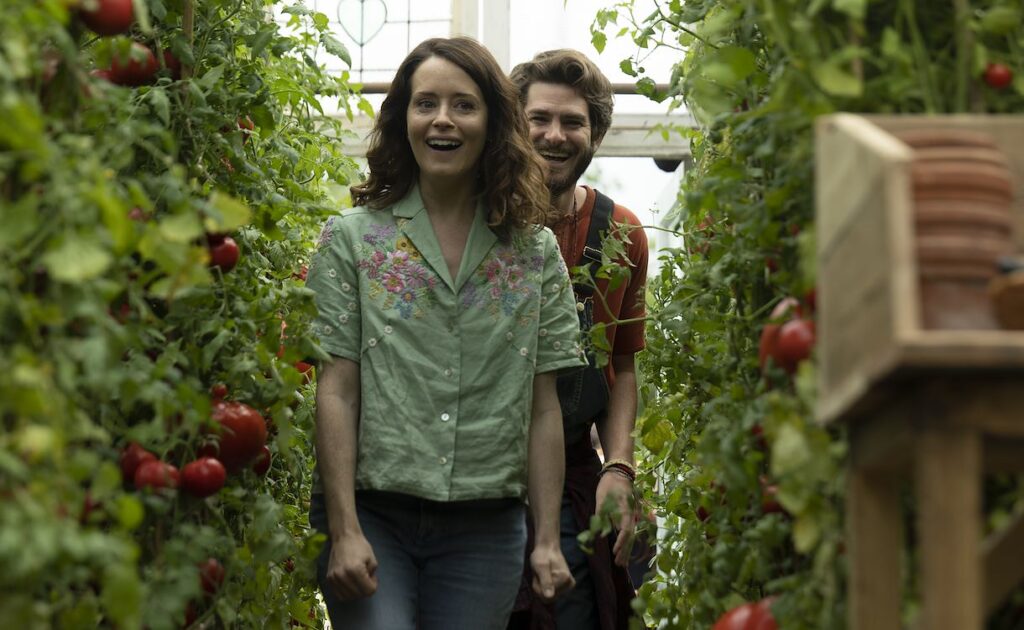
Andrew Garfield and Claire Foy are really warm, lovely people. And they’re amazing actors. They get on really well.
And you can’t create that. Okay, you can’t pretend that. So they were goofing off and teasing each other during takes and on the floor.
And they just set the tone for a really warm environment. And they work well together. And, you know, Claire starts out as the more responsible one.
But she starts having fun, too, because I didn’t want it to be like, you know, Andrew is just the goofy one, and she’s the really serious one. And so that was a boring, shallow portrayal of moms and all that they do.
So we wanted to make sure that she had a lot of fun as well.
Instead of relying entirely on CGI, you built practical, edible sets like the Land of Goodies, using real candy that the child actors could actually eat on camera. What made you want to create that world so tangibly, and how important was it to give the children that sense of wonder and discovery for real?
Filming is quite boring. And I thought the kids would be bored. And you’d see it in their eyes if they couldn’t really touch and feel the most important things around them.
So, we built as much as we could for real. But we also really brought VFX into the process and embraced it from the beginning. We made our own VFX company.
And we all lived above an abandoned subway station, a tube station. And we kind of had fans pointing at servers. And the VFX guys were in amongst us, creating, having fun, taking risks, and inventing new techniques.
So, the whole way the VFX feel and interact with the real environments is so seamless. Because it wasn’t like, “Oh, let’s send this off to the post house.” It was like, we’re all in one big building together.
So, I’m a huge believer in the artistry of VFX. And I think it’s very maligned. I think that people put it down, and they go like, they have a sort of macho vibe of, “There’s no blue screen. We should do it just for real.” It’s like, “Did you know? I’m not cheating.” So, I love VFX.
And it lets us do what we do. It lets us make a ladder to the clouds. I can’t actually do that.
And that’s okay. So, we brought VFX close to our hearts and celebrated them every day. I wrote them a song.
The roller-skating waiters in the Land of Birthdays feel like one of those wonderfully unexpected details that somehow make a fantastical world feel completely alive. Where did that idea come from and were you, in a way, trying to make the set just as magical and surprising for the cast as it would be for the audience?
Yeah, the roller skating waiters are one of the least spectacular moments of the film.
There were supposed to be a lot more of them doing a lot more. I saw a thing of some restaurant with some roller skating waiters. They were insane.
We couldn’t quite afford them, so we had like four skating waiters. But it’s still great.
I wanted it to be a fun place. I wanted the Land of Birthdays to be a fun place. That was actually quite a hard thing to design.
Because we did this kind of amazing, moody place, and it looked a bit like a sort of Russian oligarch’s party, which is the wrong tone. We were like, hang on a second. And we just wanted to go split screen to make it full of amazing moments.
And it all went wrong. I thought the happier I made the place, the more disastrously wrong the disasters would feel, and the more tragic they would feel, because they had these mistakes to fix. So, the roller skating waiters ended up being perfect in the movie.
There were supposed to be a few more of them. I will say that with honesty.
The chaotic water fight scene between the three children and their father—played by Andrew Garfield—was entirely unscripted. You took it one continuous take and left it in the final cut. What made you know that moment had to stay in the final cut?
So that was entirely unscripted. But then we agreed to do it for the very last moment of the film, of that day’s shoot. If I went extra fast, I would earn the time to do that.
So, I was like hurrying along through the day. We got there. I think we only had about 15 minutes to set it up.
We just had beautiful, low sunlight at the end of the day. The art department had made these bicycle pumps that could spray water, and sponges and buckets. And we just said, “Fight.”
And that was it. And they did. And all of those sponge hits and everything.
And the laugh that you see on their faces in that, it’s real. And this is a family. The water fight is the first time you see them all playing.
At the beginning of the movie, they’re just on their own, and they’re having a beautiful fight. So, it was a great idea.
If Enid Blyton could watch this adaptation today, what do you hope she’d recognize immediately, and what do you think would surprise her most?
I think Enid Blyton would be fairly surprised by quite a lot of the film.
I think she would like the spirit of it. I would hope so. It’s a real privilege to work with such a great writer.
She’s the third most translated writer in the world after Shakespeare and the Bible. People love Blyton. The spirit, the crazy spirit of it, I think she’d be surprised that we could actually capture that in a motion picture.
Describe the film in one word.
Delicious.
The film is delicious. You can eat it, and it will taste good.

 Lakshmi



-2-300x225.png)