 Lakshmi
“You’re not getting it,” Niko says in one of the film’s defining moments. “Girls don’t want to be happy. They want to be free.”
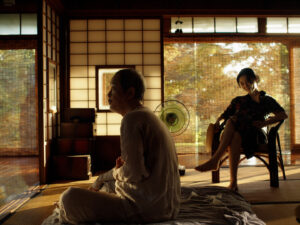
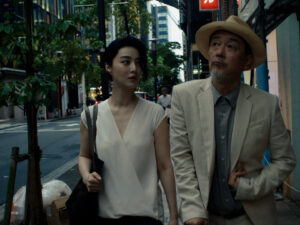
French director Julien Birban Levy’s Niko is a bold and intimate exploration of love, freedom, and the search for connection in a dystopian future. Set in a near-future Seoul where society is facing the possibility of the world’s end, the film follows Niko (Tiffany Young), a deeply romantic woman navigating an uncertain city while trying to live and love on her own terms.
Through its vibrant portrayal of Seoul and its emotionally complex characters, Niko examines what it means to remain open-hearted in a world shaped by isolation and uncertainty. Blending romance, science fiction, and a deeply personal visual style, Julien creates a portrait of a woman determined to be understood.
In this interview with One Lash Shot, Julien discusses the inspiration behind choosing Seoul as the film’s setting, his collaboration with Korean actors and crew, and his vision for a story about romance, independence, and human connection.
What drew you, as a French director, to tell a story set in Seoul?
So basically, I had the idea for Niko for a while. It had been in my head for some time, and I had already written the basic storyline. Then I needed to find a city.
I really wanted a city that was almost attacking Niko, because I thought the story was basically about romance versus the big city. Niko is an incredibly romantic person, very pure in the way she approaches her feelings, and I wanted the city to not be kind to her.
When I was thinking about where to shoot, I was born in Paris, but I felt that Paris was maybe too cute for this story. I live in Japan, and I also think Japanese cities can sometimes feel too clean and too nice.
A few years ago, I shot a short film in Korea. While I was shooting there, I thought, “Oh, this is the place.” Seoul is such a massive city. It’s huge, complex, and full of energy. It’s great during the day, but it’s also very colorful at night. It’s such an interesting place.
So, I thought, “This is definitely where I want to shoot.” And when I saw the result of that short film, I realized that Seoul also fit very well with my visual style. So, I decided to write the script specifically for Korea.
This marks Tiffany Young’s feature film acting debut. What made her the right choice for the role?
I think, first of all, we needed someone who could act in both English and Korean. The first time her name came up was from my producers. They suggested her, and I thought, “Let’s try.” I watched a TV series she was in—I think it was for Apple TV—and she was really good in it. So, we sent her the script, and she said yes almost immediately. She really wanted to do it.
Then we had a meeting. We had a video call because I was in Japan and she was in Korea. She had a script full of notes. She had so many ideas, and I thought, “That’s amazing.” As a director, that’s exactly what you want to see. The first thing she told me about the character was, “Okay, I don’t think Niko is crazy. She does something crazy, but she’s not crazy.”And I thought, “Okay, you got it. This is exactly my point.”
So yeah, the choice was honestly very easy for me as a director. I immediately thought, “This girl is perfect for this role.”
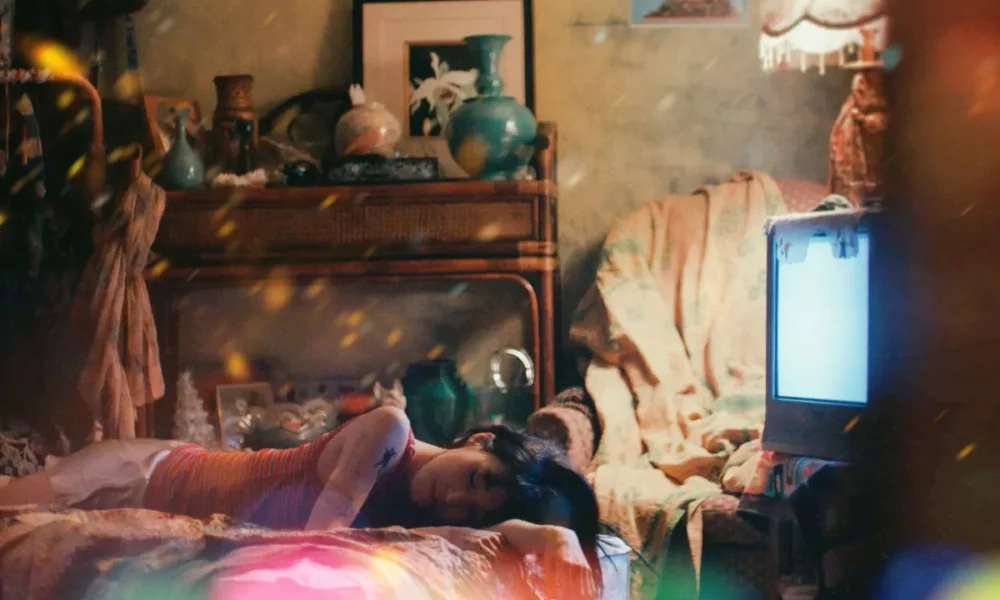
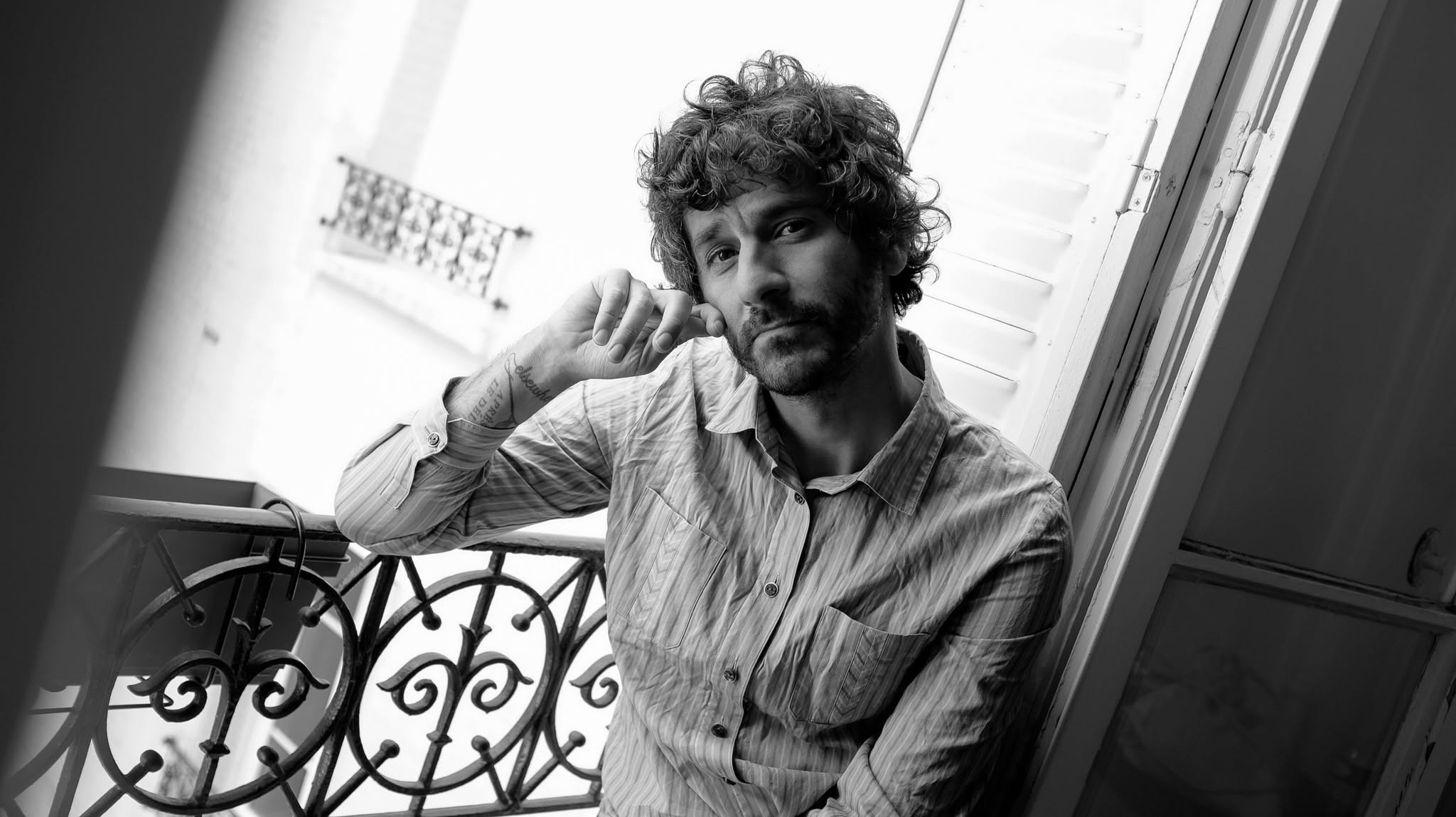
With this ensemble—her, Sandor Funtek, whose previous work includes Blue Is the Warmest Color, and Soy Kim—what was it about these actors that felt uniquely suited to the world and emotional landscape of Niko?
Sandor and Soy are two actors I really loved. I had worked with Soy before, and I had seen Sandor in so many films. So, I kind of offered them the roles immediately. I was like, “I want you guys to do it.”
Then, as soon as we were all together in Korea, it was about getting them to spend as much time together as possible because there was such a strong synergy between them. They needed to become really good friends for the story to work.
So, I was like, “Let’s go out all the time. Let’s keep the relationship alive.” I didn’t want it to be a situation where they just arrived on set and suddenly started acting. We really wanted to build that connection beforehand.
And that’s what we did. I think it went really well. They both carried their characters perfectly, and honestly, they were very easy to cast and to work with. They were amazing.
You mentioned you lived in Japan, but wasn’t it challenging shooting an entire film in Seoul?
No, it was definitely difficult because I don’t speak the language. I speak Japanese, but I don’t speak Korean yet, at least. So yeah, it was tough. It was challenging because there were some things I didn’t understand, but the producers, the cast, and everyone involved were incredibly helpful. Basically, everyone communicated in English on set, so it worked out well.
I think what really helped was that I was so inspired by the place because it was somewhere completely new for me. Of course, there were challenges because of the culture shock in a way, but at the same time, it was also a huge source of inspiration.
Every street was inspiring to me. I was constantly thinking, “Let’s shoot here. Let’s shoot here.” The city felt much more alive to me than it would have if I had shot the story in Tokyo, for example. So, I would say it was difficult, but it was definitely for the best.
And Seoul? When I was there shooting my short film, I kind of fell in love with the city. I thought, “I love this place.” Compared to Japan, where I live, Seoul feels much more raw. In a way, it reminds me of France. People are more straightforward. They say what they want to say. In Japan, everything is a little more about politeness and reading the situation. But yeah, I just love Seoul. I love it as a place to make movies. It’s like I found the perfect city for my films. It’s as simple as that.
Niko goes to extraordinary lengths to preserve her feelings through the vinyl record. How did you interpret that act—as romance, desperation, or something else entirely?
I think, in my opinion, it’s romantic. That’s the core of it.
But what’s important is that it’s her way of making people feel what she feels throughout the whole film. She’s constantly trying her best to be understood. People love her, you know? Everyone is kind of in love with her, but no one really listens to her. Her work isn’t going well. She’s writing stories, but no one wants to make them, and things like that. So, she’s a very misunderstood person.
In the end, she does something that makes people understand how romantic and passionate she really is. For me, it’s a romantic gesture that most people would think is insane. But the whole buildup of the film allows you to understand that she’s not crazy. The world is crazy, and she’s just trying to adapt to it.
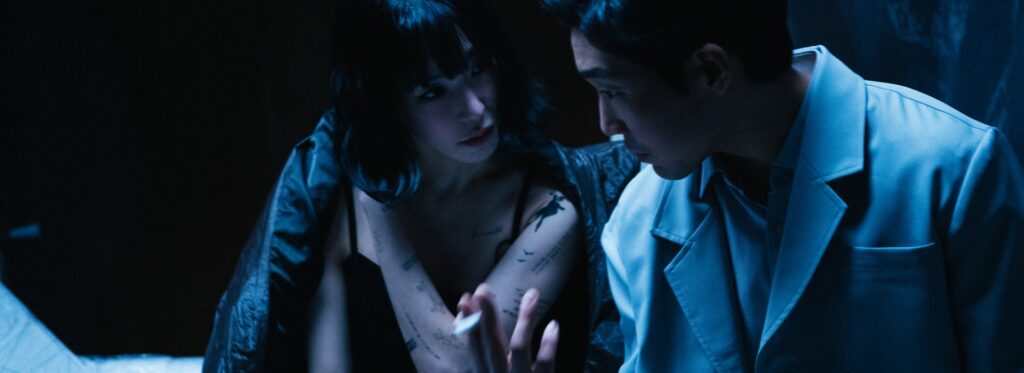
The use of neon and fractured city lights—especially in the brothel scene—evokes the emotional atmosphere of Wong Kar-wai’s films. Was that visual language something you were consciously exploring, and what did it allow you to express about Niko’s journey?
I’m definitely inspired a lot by 1990s Korean films, but also by Hong Kong cinema. Wong Kar Wai, for sure, was a huge cinematic shock for me. That’s definitely one of my biggest influences.
I think I just love playing with light. I’ve always loved doing that. From the beginning, I asked my director of photography to make sure the film was as colorful as possible. For example, there is not a single white wall in Niko. There are zero white walls in the entire film. Everything is colored all the time. That was also a way of telling the story. Some scenes have very cold colors, while others are very red or orange. Niko’s apartment is especially warm because she has built a space that feels secure and safe for her. So, the lighting and colors are very warm.
Colors are definitely an important factor for me. They are a way to help the story move forward. And I just love colors. I used to work as a photographer as well, and I always played a lot with color grading. Actually, the color grading for Niko took a very long time because it was so important to me. We did it in Paris with my usual color grading team. It was a long process, but it was incredibly important.
So yeah, I’m happy you noticed.
You mentioned the challenges of shooting in Seoul. Were there any other difficulties that stood out during the production process? What would you say was the most challenging part of making this film?
I would say the biggest challenge was that, in general, shooting an indie film like this with limited time and money is just really difficult. It’s hard for everyone. Everyone has to work so hard, often without a lot of resources, and that was definitely challenging. But apart from that, I was surrounded by such an amazing crew that I didn’t feel there were any especially difficult moments.
I would say the most challenging part was probably the weather. It was winter in Korea, and it was around minus 10 degrees all the time. It was crazy. You don’t really see it in the film because we were originally supposed to shoot more in the fall. So, the characters are dressed accordingly—I didn’t want them to be dressed for a harsh winter. The actors were really brave, especially because there are scenes where Niko takes off her jacket, for example. And it was minus 10 degrees outside.
Tiffany was just like, “It’s fine, let’s do it.”
So yeah, I have huge, huge respect for them.
Looking back at Niko, is there one scene that remains especially meaningful to you as the director—the moment that feels closest to the heart of the film?
Oh, difficult question. I think the scene where there is this big clash between Niko and Jeremy, just before she kind of runs away for a while, was probably one of the most difficult.
It was challenging for so many reasons: the acting, the fact that it was a long sequence shot, and also the camera work. The camera was really difficult because we shot on the stairs in Seoul. It was cold, it was late at night, and there were so many technical challenges. I thought that would be the most difficult scene, but it turned out so well. So that would definitely be one of my favorite scenes.
There are also some shorter scenes that I really love. There is one scene where she’s on the phone, and we never see her face. We just see her hands playing with the phone, and I’m really proud of that scene. I was like, “This is cool. I’ve never seen that before.”
So, I have a lot of little scenes that I really love because they were fun to shoot, fun to edit, and fun to create.
But if I had to pick one, it would probably be that big confrontation between the two main characters. It had to feel believable, and it had to be executed really well by the cast. So yeah, I really love that scene.
Was there a specific moment during the process of making Niko that felt especially emotional or meaningful for you as a filmmaker?
No, I think there were so many moments. The first one that comes to mind was when I went to Korea for the first time to meet the producers. They had read the script, and they told me by email, “Yeah, we want to do it. Let’s meet.” So, I went to Korea to meet them. We just went for dinner, had some drinks, and they were very straightforward. They were like, “Yeah, we want to do it, and we want to shoot it next year.” And I remember thinking, “This is such a dream.” I had always wanted to shoot in Korea, and these people weren’t trying to change my script or break my story apart. I have endless gratitude for them. I really love these producers. So that was probably the most emotional moment for me. I went back home to Tokyo thinking, “This is great. This is going to be a great experience.”
Then, during the shoot, I think the first time I really felt it was when we were filming the second day. The first day was just very small scenes, but on the second day, we had this long scene in a market where Jeremy and Niko pretend not to know each other. That was the first big scene we shot, and Tiffany was so good. That was the moment when I realized, “Okay, I made the right choice with the casting.”
It was such a relief because you know she’s going to be so important to the success of the movie. Seeing that my two main actors were so good, and that they worked so well together, was probably my biggest moment of joy.
If you had to describe Niko in a single word, what would it be—and why?
It’s not easy, but I think I would say “provocative”.
Yeah, I want to provoke people. I want to make people, like, travel emotionally. I want to challenge them. It’s like, “You thought love was like this? No, it’s actually like that.”
That’s what I want to do. I want to show them something different.

 Lakshmi


-2-300x225.png)