
 Lakshmi
Some memories never truly disappear. They linger beneath the surface until something forces them back into the light. In Deep Quiet Room, Taiwanese director Ko Shang Shen crafts a poignant psychological drama about buried trauma, family secrets, and the lasting impact of the past.
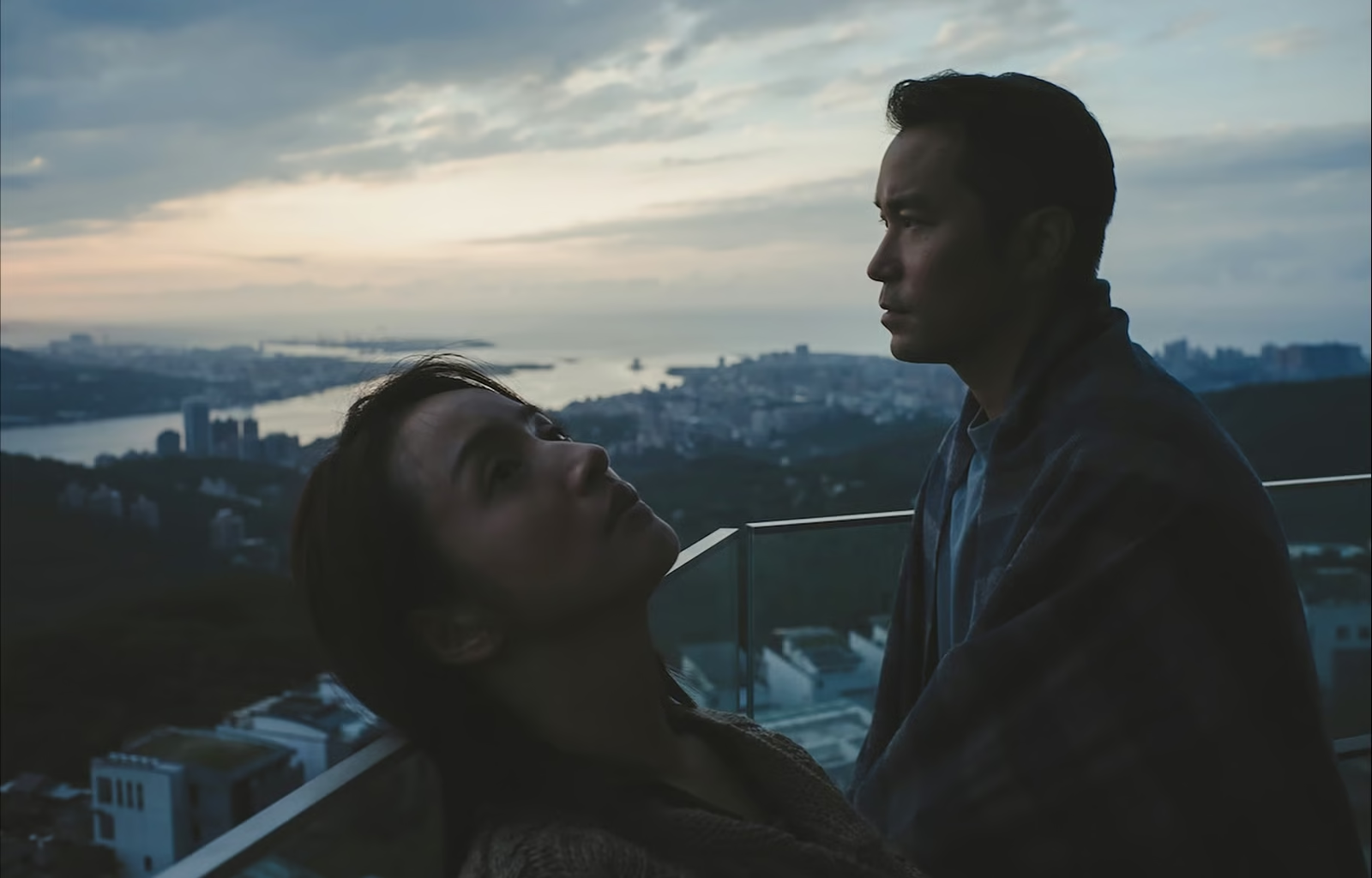
Adapted from Lin Hsiu-ho’s acclaimed novel, the film stars Ariel Lin as Yi-Ting, whose long-suppressed childhood memories begin to resurface after she becomes pregnant. As she struggles to confront the trauma she has kept hidden for years, her husband Ming, played by Joseph Chang, desperately tries to support her despite never fully understanding the pain she carries. Chin Shih-Chieh also stars in a pivotal supporting role, rounding out a cast that brings remarkable emotional depth to this intimate story of love, memory, and healing.
Known for his memorable performances in Eternal Summer (2006), Girlfriend, Boyfriend (2012), and The Stolen Years (2013), Joseph Chang brings quiet empathy and restraint to Ming. Behind the camera is Ko Shang Shen, whose previous work includes a segment in the acclaimed anthology 10+10 (2011). Although both were involved in 10+10, Deep Quiet Room marks their first feature-length collaboration.
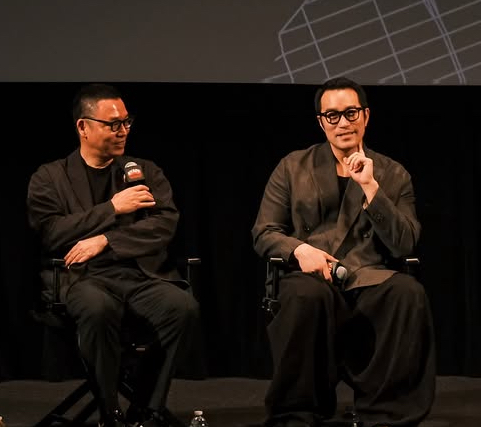
Ahead of the film’s screening at the New York Asian Film Festival (NYAFF), One Lash Shot spoke with Ko Shang Shen and Joseph Chang about adapting a beloved novel, collaborating for the first time, and bringing this emotionally resonant story to the screen.
How did each of you first find your way into the film industry?
Director Shen: I went through film academy, and the reason I got into filmmaking was because I was inspired by Peter Greenaway, the director. Because of him, I decided to pursue filmmaking as a career and eventually attended film academy.
Joseph: I was discovered by directors while I was on my way home from school. That’s how I got into film.
You both took part in the acclaimed Taiwanese anthology film 10+10, but as far as I know, this is your first time working together. Is that right?
Both: Yes, that’s correct.
Mr. Shen, Deep Quiet Room is adapted from Lin Hsiu-ho’s acclaimed novel, with the screenplay written by you and Lu Hsin-chih. What was it about the novel that made you want to bring it to the screen, and what were the biggest challenges in adapting such an intimate psychological story into a film?
Director Shen: Before I came across the short story by Lin Hsiu-ho, I actually started this project as a documentary. I conducted extensive fieldwork, interviewing many female victims who were dealing with trauma from their childhood, including experiences of domestic abuse and sexual assault.
Eventually, I realized that I could not ethically make this into a documentary film without potentially causing the victims to relive their trauma. So, I began to consider the possibility of transforming the project into a fictional narrative instead.
That was when I found the short story. I do think the content and details of the film have very little to do with the original story itself, but the short story provided me with a framework—an observer’s perspective through which I could explore the interactions and connections among three different elements.
The first is the wife who has passed away and the trauma she had suffered. The second is the surviving husband and how he has to cope with the responsibility of taking care of his father-in-law after his wife’s death.
I felt this framework could carry all the research and fieldwork I had done for the documentary project. I used those experiences to provide the emotional texture, details, and substance of the film. By doing so, I was able to preserve a sense of realism and a documentary-like quality, while also creating composite fictional characters inspired by the experiences of different victims.
Joseph, what was your first reaction when you read the script? Ming spends much of the film trying to support Yi-Ting without ever fully understanding the emotional weight she carries. What drew you to portraying a character who is constantly searching for answers but never has the complete picture?
Joseph: Based on my own lived experiences and observations, I’ve noticed that films dealing with issues like this often focus primarily on the perspective of the victims—the people who have experienced the trauma or are being cared for as victims. It is much rarer to see films that shed light on the perspectives of the caretakers or companions who support those suffering from decades-long trauma.

For me, that was one of the things that drew me to this film. Although domestic abuse and sexual assault are not experiences I have personally gone through, they are not issues that feel distant from my own reality. I was interested in exploring this story from the caretaker’s perspective and examining the emotional weight and responsibilities that come with supporting someone through their trauma.
If you had to describe Deep Quiet Room, how would you do so?
Director Shen: If, when you close your eyes, you can see a face appear in your head that will calm you and anchor you, then you have every reason to live on.
Joseph: For me, especially after watching the movie, I think communication is not just a way to think or listen, but it’s also about being able to open yourself up, be honest with yourself, and involve yourself in introspection. Through that, you can actually see things from the other person’s perspective in order to have true communication. So, communication is key.project coming up in Thailand.

 Lakshmi





-2-300x225.png)