
 Lakshmi
Arnaud Desplechin’s Two Pianos is an intimate romantic drama about love, music, memory and the choices that shape our lives. Two Pianos follows Mathias, a virtuoso pianist who has spent years living in exile in Japan and Asia before returning to his hometown of Lyon, France. There, he unexpectedly crosses paths with Claude, a former love played by Nadia Tereszkiewicz and encounters a child who bears an uncanny resemblance to him. His return sets in motion a reckoning with the life he left behind, as buried emotions, unfinished relationships, and questions of identity begin to surface. With music serving as both backdrop and emotional language, Two Pianos explores the uneasy collision between the past and the present and what happens when the life you thought you had left behind is waiting for you when you return.
One of France’s most acclaimed contemporary filmmakers, Arnaud Desplechin has built a remarkable career spanning more than three decades, with films including La Sentinelle, Kings and Queen, A Christmas Tale and Brother and Sister. Known for his emotionally rich character studies and distinctive cinematic language, Desplechin brings his fascination with human relationships and inner lives to Two Pianos.
Nadia Tereszkiewicz, one of French cinema’s most exciting young talents, broke through with Valeria Bruni Tedeschi’s Forever Young (Les Amandiers), for which she won the César Award for Most Promising Actress. A former ballet dancer, she has since appeared in films including Rosalie and The Crime Is Mine, establishing herself as a versatile performer capable of bringing both vulnerability and intensity to her characters.
François Civil is one of France’s most recognisable contemporary actors, known internationally for films such as The Three Musketeers and Someone, Somewhere. With a career spanning more than a decade, Civil has become known for his ability to move effortlessly between romantic drama, comedy and action.
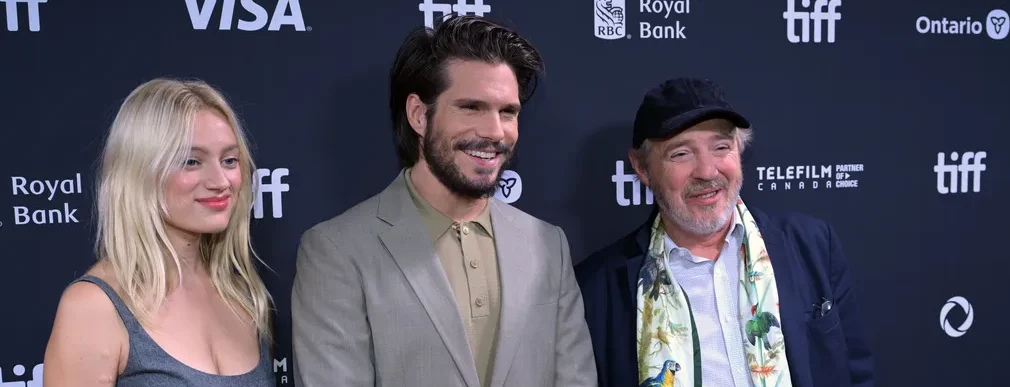
In this conversation with One Lash Shot, Desplechin, Tereszkiewicz and Civil discuss the making of Two Pianos, the emotional power of music, the complexities of their characters, and what it means to begin again with every new film.
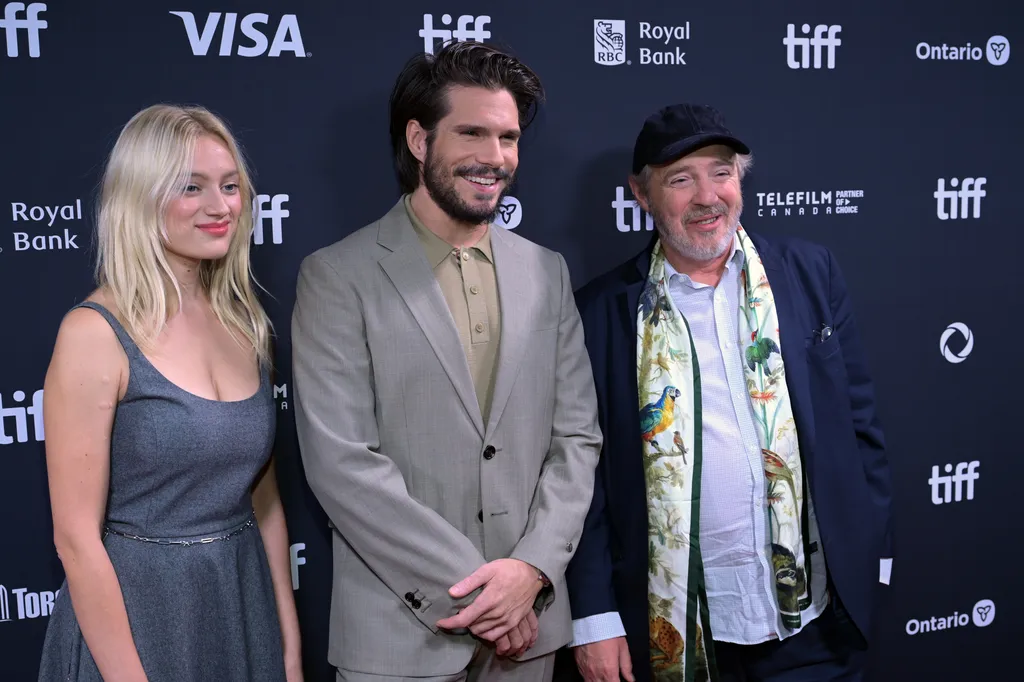
Arnaud, after such an extraordinary career, what drew you to this particular story, and why did you feel it was the one you wanted to tell now?
Arnaud: Each time I make a new movie, I have this desperate hope that you won’t recognize me. And people who like my films, you know, after the screening, they say, “Oh, just like you.” And I think, no, no, no, no. What I want is to make something absolutely different from me. I’m bored with myself, you know. What I’m in love with is Nadia and François Civil. I like them, I love them, you know, and I wanted to tell a story—a melodrama—that would be about young characters, you know, dealing with difficult issues. But they’re so young, you know, and that youth in the film was the beauty of it.
And what was it about Nadia and François that made you feel they were the right actors to bring these characters to life?
Arnaud: You know, since Les Amandiers, the film by Valeria Bruni Tedeschi, I’ve been absolutely in love with Nadia. I knew that, one day or another, I had to meet her and film this woman. And François Civil—we met in a café because I didn’t know my hero; I didn’t fully understand my hero before I met him. He explained my own script to me, you know, and he was the most brilliant actor I had ever met. So, I said, “Okay, let’s make the film together.” Et là, on va travailler avec de nouveaux acteurs. Je pense à Nadia et à François, parce qu’il va y avoir une personnalité jeune qui va rapporter le sujet des univers du cinéma que je ne connaissais pas.
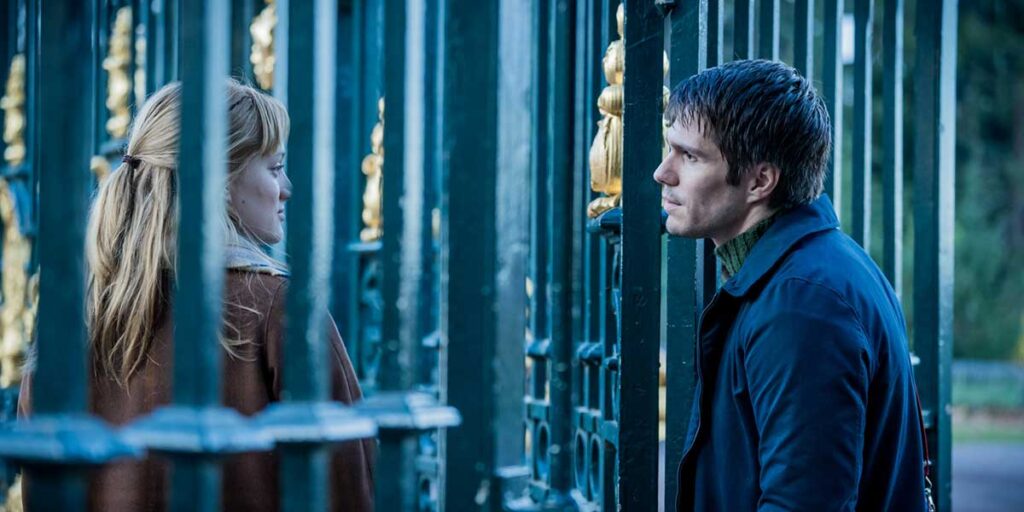
Nadia, you began your career as a dancer, appearing in films and music videos while studying, before making your feature-film debut in La Danseuse. How did that experience shape the actor and artist you are today?
Nadia: Yeah, exactly. I actually danced in Toronto. I was at Canada’s National Ballet School about 12 years ago. Wow! This is my first time back after 12 years.
Well, actually, I first started dancing in movies to make money. Then, at one point, they asked me to audition for a feature film as an actor, so I did the audition, it worked out, and I just continued.
I mean, it was really thanks to dance, but at first, I was just dancing in different projects to make money. It wasn’t the purpose at the beginning. But then, at one point, I felt that I wasn’t finding meaning in dance anymore. I felt like something was missing from my expression, as though I was blocked because maybe I needed words. And I found that in cinema, I could have both the body and the words, you know.
If I may ask, what is your favourite ballet?
Nadia: That’s a good question, like classical ballet or in general?
Classical.
Nadia: Oh, in classical ballet? I would say Swan Lake. The music is so beautiful, and the dancing is so beautiful. Every time I see it, I just cry. So, I would say Swan Lake.
Are you Odette or Odile?
Nadia: Oh, both. Can’t pick.
François, you’ve been acting for nearly 20 years.
François: Twenty years? That seems like a long time, but that’s right. Yeah, I’ve been doing this for 14 years, so… yeah, you’re right.
What are some of the most important lessons your career has taught you that you brought into this film, particularly in your first collaboration with Arnaud?
François: I don’t know. I think every time I start a new project, it feels like the first one. That’s why when you say I’ve been working for 20 years, it seems absurd to me, but still—you’re right. Yeah, that’s true. So, I don’t know what I brought. I mean, of course, some experience, but Arnaud is such a singular filmmaker that you have to renew everything you know.
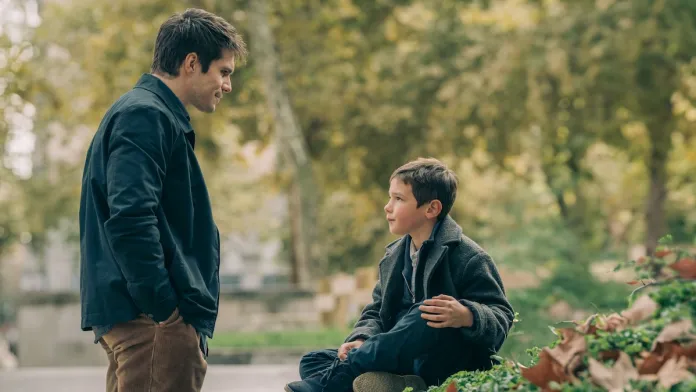
Je voulais savoir exactement ce qu’ils m’avaient demandé dans le film, mais en tout cas, c’était une manière de connecter avec les personnages. Et après ça, en fait, j’ai trouvé l’histoire un peu plus versante.
Nadia, how did you prepare for your role in Two Pianos and how did you navigate the complexities of the character?
Nadia: Well, I think I tried to concentrate on the path she takes. She’s someone who is lost and trying to make a decision in her life, and in a way, it’s the journey of making that decision.
Il y a un endroit, il est un peu perdu. J’ai adoré l’apprendre à cet endroit-là de fragilité, à un moment où en fait on est débordé par ses solutions et qu’il y a quelque chose presque qui la dépasse.
And I feel like there’s something about her: she has so much passion within her, but at the same time, she wants to choose something reasonable. And at one point, when Mathias comes back, everything becomes blurred, and all those emotions come pouring out. I love it because, in Arnaud’s cinema, emotions are bigger than life. If you cry, you cry. Everything is so intense, and I felt that this character needed to be overwhelmed by what happened to her. That’s something I love to explore in cinema—to search for that kind of sensation.
François, you’re working with Hippolyte Girardot, after having worked extensively with Ana Girardot. What was it like collaborating with her father for the first time?
François: It was nice. I mean, Hippolyte is an actor, of course, and the fact that I knew his daughter made things easier in a way. So, we had a few things to chat about on set.
Did you have to learn to play the piano since this movie is built around music?
François: Yes, I did. I played some piano when I was a kid, but I had to play quite a bit more for this film—quite a lot, actually. But it never felt painful or anything. I didn’t count the hours I put in because it was such a joy.
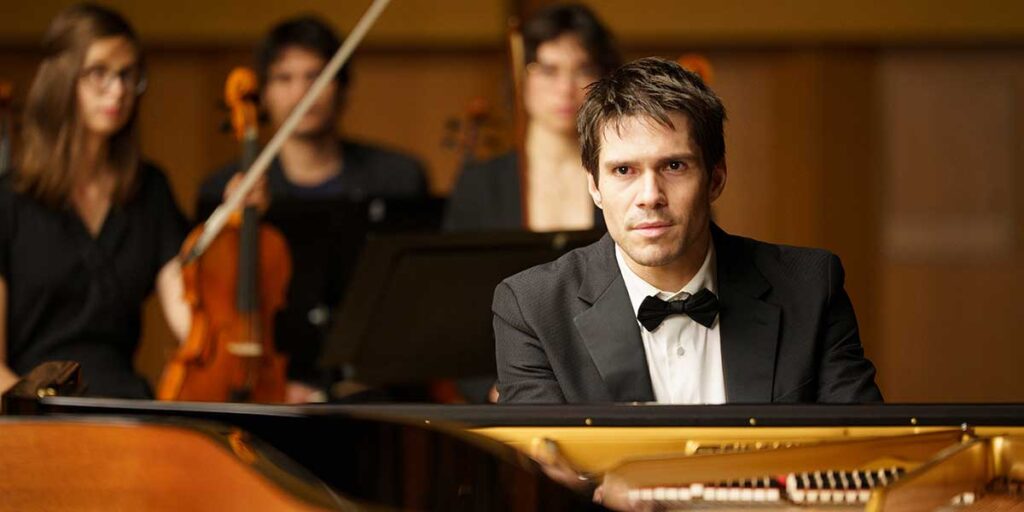
Finally Arnaud, what drew you to incorporating music and the piano into the story, and what did they allow you to express that words couldn’t?
Arnaud: Because I think that, as I was saying, the film is a melodrama, and I think that music calms the soul. It’s a solace; it soothes the difficulties of life, you know. And I wanted to offer that consolation to the audience, and music brings that consolation.

 Lakshmi


-2-300x225.png)